
Dental Aligner 3D Printing: What to Know
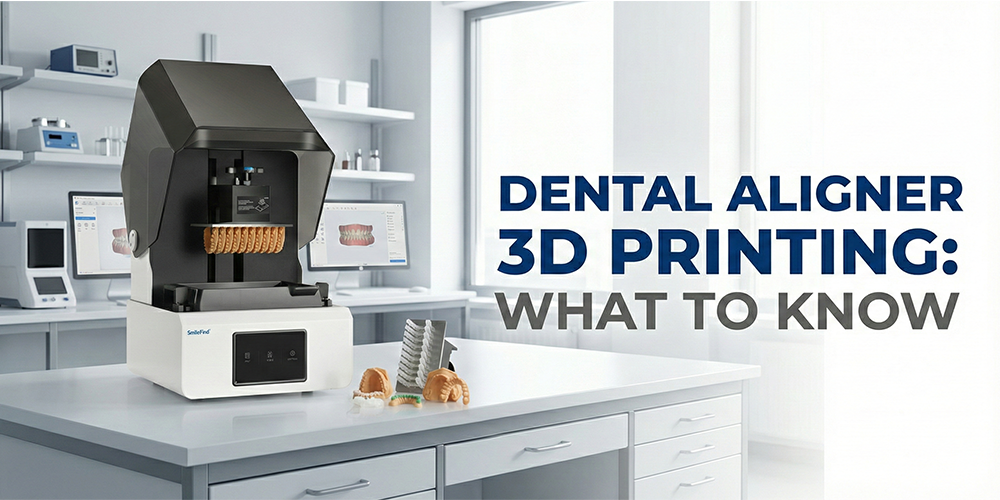
Dental Aligner 3D Printing.
Let me guess what you’re thinking.
Is it actually worth bringing aligner production in-house?
Will it really save time, or just add another headache?
And do I actually need a “proper” dental 3D printer, or will any machine do the job?
I’ve had these exact conversations with clinic owners and lab managers more times than I can count.
Usually over coffee.
Usually after something went wrong with outsourcing.
So let’s talk about it properly.
No hype.
No tech waffle.
Why Dental Aligner 3D Printing Is Taking Over
Here’s the reality.
Outsourcing aligners works… until it doesn’t.
Delays pile up.
Revisions take days.
You lose control over timelines.
And suddenly, your workflow depends on someone else’s schedule.
Dental Aligner 3D Printing flips that dynamic.
You design today.
You print today.
You move the case forward today.
That speed alone is why so many orthodontic clinics and dental labs are changing how they work.
But speed isn’t the real win.
Control is.
How Dental Aligner 3D Printing Actually Works (Day to Day)
Let’s strip this back to the basics.
No buzzwords.
No overcomplication.
The workflow usually looks like this:
Digital scan or impression
Aligner stages designed in software
Models printed using a dental 3D printer
Aligners thermoformed over printed models
That’s it.
The problem isn’t understanding the process.
The problem is consistency.
If your printed models aren’t accurate every single time, aligner fit suffers.
And once fit suffers, everything else follows.
That’s where most setups fall apart.
The Real Requirements for Dental Aligner 3D Printing
This is where people make expensive mistakes.
They assume “3D printer” means “good enough”.
It doesn’t.
Dental Aligner 3D Printing demands a very specific kind of performance.
Here’s what actually matters:
Accuracy you can rely on every day
Repeatability, not just a good first print
Enough build volume to print multiple models at once
Stable operation during long print cycles
Materials designed for dental workflows, not hobby projects
If a printer can’t do all of that consistently, it becomes a bottleneck instead of a solution.
Why Clinics and Labs Are Moving In-House
I’ve seen the same pattern again and again.
A clinic starts small.
One or two cases.
They outsource everything.
Then volume grows.
Turnaround time becomes an issue.
Margins get tighter.
That’s when in-house Dental Aligner 3D Printing starts making sense.
Here’s what changes when you bring printing inside:
Faster case progression
Immediate revisions
Better workflow control
Predictable production output
Most teams I speak to don’t want “more tech”.
They want fewer delays.
Using a professional dental 3D printer built for orthodontic workflows removes a lot of friction from daily production.
If you want to see what that looks like in practice, this is the type of system clinics and labs are using:
👉 https://www.smilefinddent.com/product/dental-3d-printer/
(No sales pitch.
Just an example of equipment designed specifically for dental use.)
Choosing the Right Dental 3D Printer for Aligner Production
This is where decisions matter.
Not all printers are built for Dental Aligner 3D Printing.
And that’s not opinion.
That’s experience.
Things I’d personally look at before committing:
Is this printer designed for daily dental use, not occasional prints?
Can it maintain accuracy across long production runs?
Does the manufacturer understand orthodontic workflows?
Is it scalable when case volume increases?
Working with a specialist dental 3D printer manufacturer makes a difference here.
Not because of branding.
Because they understand the realities of aligner production.
If you’re evaluating options, this is a solid reference point for a dental 3D printer for aligner production
Common Questions I Get About Dental Aligner 3D Printing
Is Dental Aligner 3D Printing realistic for small clinics?
Yes.
Many clinics start with limited production and scale gradually.
How accurate does the printer really need to be?
Very.
Small deviations compound fast when you’re printing multiple aligner stages.
Can one printer handle daily aligner production?
With the right setup and workflow, absolutely.
Is this just a trend?
No.
It’s a shift in how orthodontic production is managed.
Final Thoughts
Dental Aligner 3D Printing isn’t about chasing new tech.
It’s about removing friction from your workflow.
If aligners are a serious part of what you do, control matters.
Speed matters.
Consistency matters.
And all of that starts with the right production setup.
If you’re planning to implement or scale Dental Aligner 3D Printing, the equipment you choose will either support growth or slow it down.
And yes, it really does come back to Dental Aligner 3D Printing.
Related Blog
Inquire Us Now
We will Get Back to You soon