
What is VPS Impression Material and Why Do Bubbles Form?
VPS impression material (Vinyl Polysiloxane) is one of the most widely used high-precision dental impression materials in modern dentistry. It is known for its excellent dimensional stability, high accuracy, and resistance to deformation, making it ideal for crown, bridge, implant, and orthodontic applications.
Despite its advanced performance, even experienced clinicians sometimes encounter one common issue: bubbles in VPS impression material. These small voids may seem minor, but they can significantly affect the accuracy of final restorations.
So the key question is: why do bubbles form in VPS impression material, and how can they be prevented?
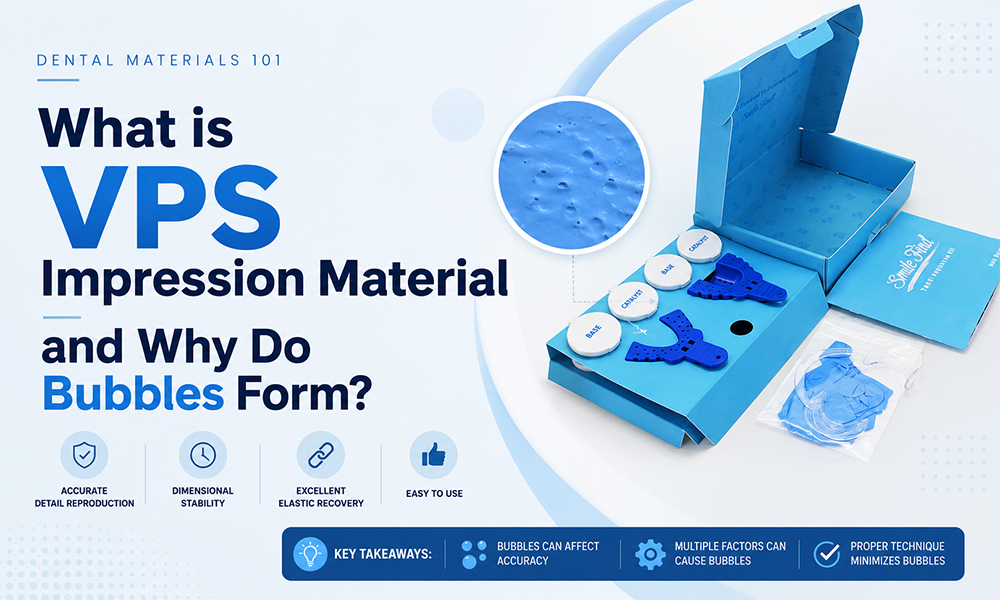
Why Bubbles Form in VPS Impression Material
Understanding the root causes of bubbles is essential to improving impression quality. Most issues are not related to the material itself, but to handling and technique.
Improper Mixing Techniques
One of the most common causes of bubbles in VPS impression material is improper mixing.
When the material is mixed manually, air can easily be trapped inside the paste. Even with automatic mixing systems, incorrect cartridge handling or uneven pressure can introduce air pockets.
Common mistakes include:
- Rapid or inconsistent hand mixing
- Improper loading of cartridges
- Interruptions during extrusion
These errors lead directly to VPS impression material bubbles, which become visible after setting.
Incorrect Tray Preparation
The impression tray plays a critical role in the final result. If it is not prepared properly, air entrapment is almost unavoidable.
Typical problems include:
- No tray adhesive or insufficient coating
- Uneven material distribution in the tray
- Inserting the tray too quickly or at the wrong angle
When the tray is not properly prepared, air gets trapped between the tray and the VPS impression material, forming voids.
Material Handling and Storage Issues
Even high-quality VPS impression material can perform poorly if it is not stored or handled correctly.
Key risk factors include:
- Exposure to high or low temperatures
- Using expired or near-expiry material
- Contamination from moisture or debris
- Improper cartridge sealing after use
These factors can change viscosity and flow behavior, increasing the likelihood of bubbles during impression taking.
Oral Environment Factors
The intraoral environment is another important variable.
During impression procedures, the presence of:
- Saliva
- Blood
- Moisture in hard-to-control areas
can interfere with the flow of VPS impression material, leading to incomplete adaptation and bubble formation.
How to Prevent Bubbles in VPS Impression Material
Preventing bubbles is more effective than correcting them later. Proper technique and preparation can significantly improve results.
Use Proper Mixing Techniques
Whenever possible, use an automatic mixing system designed for VPS materials. This helps:
- Reduce air incorporation
- Ensure consistent material flow
- Improve homogeneity
If manual mixing is required, use slow, deliberate folding techniques instead of vigorous stirring.
Prepare the Tray Correctly
Proper tray preparation is essential for avoiding VPS impression material bubbles.
Best practices include:
- Applying a uniform layer of tray adhesive
- Allowing adhesive to dry completely before use
- Loading material from one end of the tray to the other in a continuous motion
A well-prepared tray ensures smooth adaptation of the material without air entrapment.
Handle Material Properly
Correct handling of VPS impression material significantly reduces defects.
Important guidelines:
- Store material within manufacturer-recommended temperature range
- Avoid prolonged exposure after opening
- Use first-in-first-out (FIFO) inventory management
- Ensure cartridges are tightly sealed after use
Proper handling maintains optimal viscosity and flow characteristics.
Consider Environmental Factors
Environmental control is often overlooked but highly important.
To minimize bubbles:
- Keep the working field as dry as possible
- Use suction effectively during impression taking
- Avoid rushing the seating process
A stable, controlled environment improves adaptation of VPS material and reduces void formation.
Troubleshooting Persistent VPS Impression Material Bubbles
If bubbles continue to appear despite correct technique, it may be necessary to investigate deeper issues.
Check the following:
- Expired or degraded VPS impression material batches
- Malfunctioning mixing or dispensing equipment
- Incompatible tray adhesive systems
- Operator technique inconsistencies
If problems persist, switching material brands or consulting technical support from the manufacturer may be required.
Conclusion
Bubbles in VPS impression material are a common but preventable issue in dental practice. In most cases, they are caused not by the material itself, but by:
- Improper mixing techniques
- Incorrect tray preparation
- Poor material handling
- Uncontrolled oral conditions
By optimizing these factors, clinicians can significantly reduce VPS impression material bubbles and achieve more accurate, reliable impressions.
A consistent workflow and attention to detail are the keys to high-quality dental restorations.
Inquire Us Now
We will Get Back to You soon