
How to Properly Clean TPU & PETG Aligners: The Complete Ultrasonic, Temperature & Safety Guide
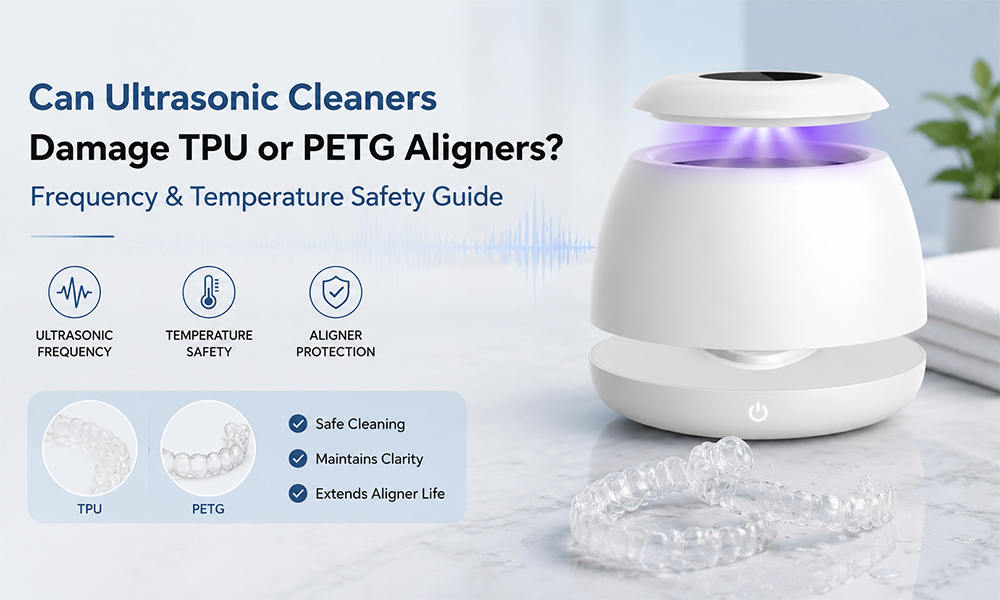
Clear aligners and retainers have revolutionized modern orthodontics, offering a discreet and comfortable path to a perfect smile. However, keeping these clear plastic appliances fresh, transparent, and bacteria-free remains one of the biggest challenges for wearers and dental clinics alike.
Many patients and practitioners turn to ultrasonic cleaners for effortless deep cleaning. But a critical question often arises: Can ultrasonic cleaners damage TPU or PETG aligners?
The short answer is: No, dental-grade ultrasonic cleaners will not damage clear aligners—provided you follow the correct frequency, temperature, and chemical safety guidelines.
Let’s dive into the science behind orthodontic materials, explore why damage occasionally occurs, and discover how to properly protect your investment with a complete aligner care routine.
The Science: Ultrasonic Cavitation vs. TPU & PETG Plastics
To understand why ultrasonic cleaning is safe, we must look at how modern clear aligners are manufactured and how ultrasonic sound waves interact with plastics.
Understanding TPU vs. PETG
Most premium orthodontic aligners and retainers are thermoformed from two primary thermoplastic materials:
PETG (Polyethylene Terephthalate Glycol): Known for its high rigidity, crystal-clear transparency, and excellent dimensional stability.
TPU (Thermoplastic Polyurethane): Known for its elasticity, high tear strength, and comfortable, continuous force delivery.
Both materials are engineered to withstand continuous intraoral forces, saliva enzymes, and moderate pressure.
How Ultrasonic Cavitation Works
Ultrasonic cleaners do not rely on coarse brushes or abrasive friction. Instead, they generate high-frequency sound waves through water, producing millions of microscopic vacuum bubbles—a process called cavitation.
When these micro-bubbles implode against the surface of the aligner, they create gentle, localized shockwaves that dislodge plaque, biofilm, proteins, and trapped debris from the tiniest crevices without scratching the plastic.
Because cavitation is non-abrasive, high-frequency sound waves cannot scratch, warp, or crack healthy PETG or TPU polymers under standard operating conditions.
Critical Safety Thresholds: Safe Frequency & Temperature Limits
When damage does occur to an aligner in an ultrasonic bath, it is almost never caused by the sound waves themselves. Instead, it is caused by excessive water heat, improper industrial frequencies, or prolonged run cycles.
Here are the safety parameters every user should follow:
| Parameter | Recommended Safe Range | Risk of Exceeding Limit |
| Ultrasonic Frequency | 40 kHz – 45 kHz (Dental Standard) | Frequencies below 35 kHz can cause structural stress on thin thermoformed sheets. |
| Water Temperature | Cold to Lukewarm (< 40°C / 104°F) | High heat causes irreversible thermoplastic warping and loss of orthodontic fit. |
| Cycle Duration | 3 to 5 Minutes | Excessive run times (15+ min) can elevate water temperature via transducer heat. |
The 40°C Temperature Limit
Thermoplastic materials like PETG and TPU are formed using heat. Exposing your aligners or retainers to hot water relaxes the molecular chains, causing microscopic warping. Even a minor 0.5 mm distortion will ruin the tracking of an orthodontic aligner or cause a retainer not to seat properly. Always fill your ultrasonic cleaner with cold or room-temperature water.
The 3-Step Cleaning System: Equipment & Consumables Synergy
Water alone can dislodge loose debris, but it cannot dissolve stubborn calculus, eliminate persistent odors, or break down grease. To achieve clinical-level hygiene, adopt a comprehensive 3-step routine.
Step 1: Daily Deep Cavitation with Dental Ultrasonic Cleaners
A dedicated orthodontic ultrasonic cleaner provides the foundation for safe daily hygiene.
The SmileFind Solution: The SmileFind Orthodontic Ultrasonic Cleaner is engineered specifically for dental appliances. Operating at an optimal 42 kHz gentle dental frequency, it features an integrated 5-minute auto-shutoff timer to ensure the water bath never overheats, keeping your TPU and PETG trays perfectly intact.
Step 2: Stain & Biofilm Removal with Cleaning Tablets
Plaque proteins and mineralized deposits require chemical breakdown alongside ultrasonic vibration.
The SmileFind Solution: Pair your ultrasonic bath with SmileFind Orthodontic Cleaning Tablets. Formulated with neutral, non-corrosive effervescent agents, these tablets release active oxygen that accelerates cavitation, lifts stains, and kills 99.9% of odor-causing bacteria without clouding PETG transparency.
Step 3: On-the-Go Maintenance Between Meals
You cannot carry an ultrasonic machine everywhere you go. When dining out or at work, trapped saliva and food particles can quickly cause bacterial buildup if you put trays back on dirty teeth.
The SmileFind Solution: Use SmileFind Aligner Cleaning Foam for instant maintenance. Simply pump the gentle, non-abrasive foam directly into your trays before reinserting them. It cleans and freshens your breath on the go without requiring immediate rinsing.
3 Common Mistakes That Actually Ruin Clear Aligners
If your aligners appear cloudy, scratched, or loose, check if you are making any of these common maintenance mistakes:
Scrubbing with Toothpaste and Toothbrushes: Most standard toothpastes contain abrasive silica particles designed to polish hard tooth enamel. On soft PETG/TPU plastics, they create microscopic scratches that scatter light (making aligners cloudy) and create pockets for bacteria.
Boiling or Dishwasher Sanitization: Boiling water or placing trays inside hot dishwashers will instantly deform the plastic, requiring an expensive replacement from your orthodontist.
Using Household Chemicals or Alcohol: Harsh chemicals like bleach, rubbing alcohol, or high-acid solutions degrade polymer structures, making clear retainers brittle and prone to sudden cracking.
FAQ
Can I use an ultrasonic cleaner every day for my TPU/PETG trays?
Yes. Using a dental-grade ultrasonic cleaner (40–45 kHz) once or twice daily with room-temperature water is completely safe and extends the clarity and lifespan of your retainers.
Should I put cleaning tablets directly into the ultrasonic cleaner tank?
Yes. Dropping a specialized orthodontic cleaning tablet directly into the water tank enhances cavitation efficiency, allowing active oxygen to penetrate deeper into appliance crevices.
Will ultrasonic cleaning make my retainers turn yellow?
No. Ultrasonic cavitation removes the organic stains and bacteria that cause yellowing. Aligners typically turn yellow from exposure to colored beverages (coffee, tea, wine) or smoking while wearing the trays.
Protect Your Aligners with Dental-Grade Solutions
Ultrasonic technology remains the gold standard for maintaining orthodontic hygiene safely and effortlessly. By keeping water temperatures low, choosing a gentle 42 kHz frequency, and pairing cavitation with non-abrasive cleaning agents, you ensure your aligners stay clean, clear, and structurally sound.
Discover our full range of dental-grade accessories, from high-efficiency ultrasonic baths to specialized tablets and portable cleaning foams, at SmileFind Orthodontic Accessories.
Inquire Us Now
We will Get Back to You soon
Note: This form is dedicated to distributors and wholesale / custom requests. Individual customers are warmly welcome to visit our Express Shop.
*We respect your privacy. Your information is safe and will never be shared.