
Why Choosing the Right TPU Sheet Matters for Clear Aligner Production
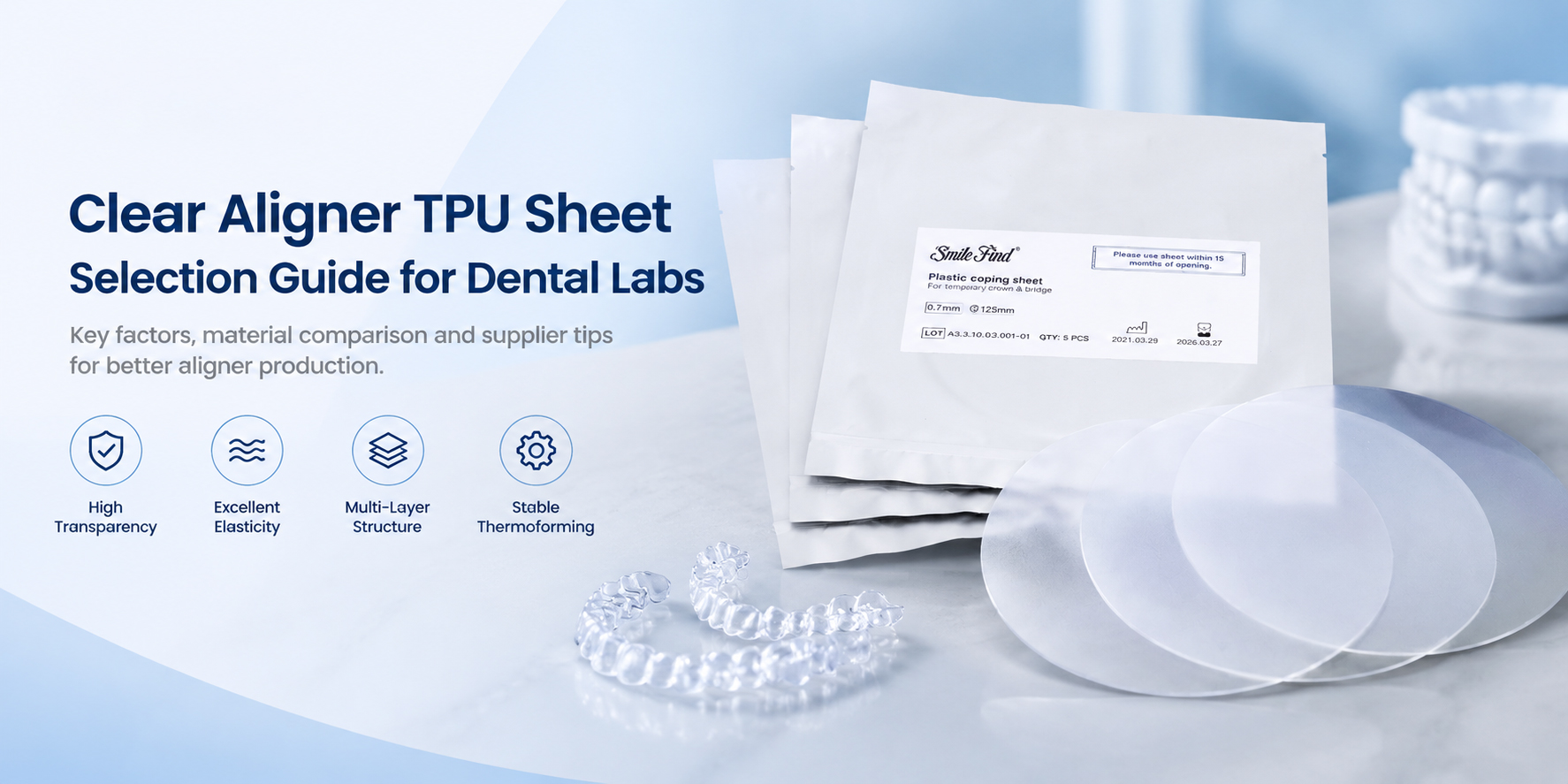
The clear aligner market continues to grow as more orthodontic companies and dental laboratories adopt digital workflows and thermoforming technologies. Behind every high-quality aligner is a carefully selected thermoplastic material that determines its transparency, flexibility, durability, and overall performance.
For dental labs and aligner manufacturers, choosing the right Clear Aligner TPU Sheet is not only about material cost. Factors such as elastic recovery, thermoforming stability, force retention, and production consistency directly influence the quality of the final aligner.
Many buyers focus mainly on sheet thickness or appearance, but overlook the differences between single-layer and multilayer structures. A properly designed multilayer TPU sheet can provide better balance between flexibility, strength, and long-term performance during orthodontic treatment.
This guide explains the key factors dental professionals should consider when selecting TPU sheets for clear aligner manufacturing.
Why TPU Has Become a Popular Material for Clear Aligners
TPU (Thermoplastic Polyurethane) has become an increasingly popular material in orthodontic applications due to its excellent combination of flexibility, transparency, and mechanical performance.
Compared with traditional materials, TPU provides better elasticity and can adapt well to different thermoforming processes used in dental laboratories.
Key advantages of TPU materials include:
- High transparency: Creates a more aesthetic appearance for clear aligners.
- Excellent flexibility: Provides comfortable wearing characteristics.
- Good elastic recovery: Helps maintain stable orthodontic force.
- Strong durability: Reduces the risk of cracking or deformation.
- Stable thermoforming performance: Supports efficient production workflows.
For professional aligner manufacturers, selecting the right TPU structure is essential because material performance directly impacts production consistency and final aligner quality.
Key Factors When Choosing a Clear Aligner TPU Sheet
When selecting TPU sheets, dental laboratories and orthodontic manufacturers should evaluate more than just product price.
The following factors are important when comparing different materials and suppliers.
1. Material Structure: Single Layer vs Multilayer TPU Sheet
One of the most important factors when selecting TPU sheets is the material structure.
A single-layer TPU sheet is made from one type of TPU material throughout the entire thickness. It offers basic flexibility and transparency but may have limitations when manufacturers require a balance between strength, elasticity, and long-term performance.
A multilayer TPU sheet uses multiple layers with different functions to optimize overall performance.
Compared with single-layer materials, multilayer TPU sheets can provide:
- Improved strength: Supports better durability during production and use.
- Balanced flexibility: Maintains comfort while providing sufficient support.
- Better force retention: Helps maintain consistent orthodontic performance.
- Enhanced crack resistance: Reduces material failure during thermoforming and application.
For companies producing clear aligners in large volumes, multilayer TPU technology provides a more stable and reliable material solution.
2. Force Retention and Elastic Recovery
Clear aligners require materials that can maintain controlled forces during orthodontic treatment.
When an aligner is formed and placed on teeth, the material continuously applies pressure to support planned tooth movement. If the material loses elasticity too quickly, treatment performance may become inconsistent.
When evaluating a TPU sheet, dental professionals should consider:
- Elastic recovery after deformation.
- Long-term force retention.
- Resistance to permanent deformation.
- Consistency between production batches.
A reliable Clear Aligner TPU Sheet should provide a balance between flexibility and force control, helping manufacturers create predictable orthodontic products.
3. Transparency and Aesthetic Appearance
One of the biggest advantages of clear aligners is their aesthetic appearance.
Patients choose clear aligners because they want an orthodontic solution that is less noticeable compared with traditional braces.
Therefore, dental labs and aligner brands should select TPU sheets with:
- High optical clarity.
- Uniform appearance.
- Stable transparency after thermoforming.
- Reduced surface defects.
High-quality transparent materials help manufacturers produce aligners that meet both clinical and aesthetic expectations.
4. Thermoforming Performance and Production Efficiency
For dental laboratories, material processing performance is critical.
A TPU sheet may have excellent mechanical properties, but poor thermoforming performance can increase production difficulties and material waste.
Important thermoforming characteristics include:
Stable Heating Response
A good TPU sheet should provide predictable forming performance under standard thermoforming conditions.
Uniform Thickness
Consistent thickness helps maintain stable aligner quality and reduces production variation.
Bubble Resistance
High-quality materials should minimize defects during heating and forming.
Equipment Compatibility
The material should work effectively with commonly used dental thermoforming machines.
For high-volume aligner production, stable processing performance is essential for improving efficiency and reducing manufacturing costs.
Common Problems Caused by Poor Quality TPU Sheets
Choosing low-quality orthodontic materials can create several challenges for manufacturers and dental laboratories.
Common problems include:
- Uneven forming: Results in inconsistent aligner thickness.
- Reduced durability: Increases the risk of cracking or deformation.
- Unstable force delivery: May affect orthodontic treatment consistency.
- Higher production waste: Creates additional material and labor costs.
- Inconsistent batches: Makes quality control more difficult.
For clear aligner brands and dental labs, stable material quality is essential for maintaining reliable production.
Single Layer TPU vs Multilayer TPU Sheet: Which One Is Better?
Both single-layer and multilayer TPU sheets have different applications.
The right choice depends on production requirements, product positioning, and expected performance.
| Feature | Single Layer TPU | Multilayer TPU |
|---|---|---|
| Structure | Single material layer | Multiple optimized layers |
| Flexibility | Good | Better balance |
| Strength | Standard | Improved durability |
| Force retention | Average | Enhanced performance |
| Production consistency | Depends on material quality | More stable |
| Application | General aligners | Advanced clear aligner production |
For premium clear aligner manufacturing, multilayer TPU sheets provide additional advantages in balancing flexibility, strength, and durability.
How Dental Labs Should Evaluate a TPU Sheet Supplier
Choosing the right supplier is just as important as choosing the right material.
Before starting cooperation, dental labs and distributors should evaluate the following factors.
Material Quality Control
A reliable TPU sheet supplier should provide:
- Stable raw materials.
- Consistent manufacturing processes.
- Quality inspection procedures.
- Technical documentation.
Stable quality control ensures every batch meets production requirements.
Production Capability
For long-term cooperation, suppliers should have:
- Stable production capacity.
- Reliable delivery schedules.
- Export experience.
- Ability to support bulk orders.
A professional supplier should be able to support both small testing orders and large-scale production requirements.
Customization Support
For orthodontic brands and distributors, customization capability can create additional value.
Possible customization options include:
- Customized packaging.
- Private label solutions.
- Different thickness options.
- Bulk supply programs.
OEM support allows businesses to develop their own orthodontic material products with professional manufacturing support.
Why Choose SmileFind Multi-Layer TPU Sheets
SmileFind® provides professional orthodontic material solutions for dental laboratories, clear aligner manufacturers, and global distributors.
Our Multi-Layer TPU Sheets are designed to support efficient clear aligner production with:
- Multilayer structure: Provides a balance of flexibility, strength, and durability.
- High transparency: Supports aesthetic clear aligner applications.
- Stable thermoforming performance: Helps improve production consistency.
- OEM and bulk supply support: Meets the needs of distributors and orthodontic brands.
Learn more about our:
Conclusion
Selecting the right Clear Aligner TPU Sheet is an important step for dental laboratories and orthodontic manufacturers.
A high-quality TPU sheet should provide:
- Reliable material structure.
- Stable thermoforming performance.
- Good transparency.
- Consistent mechanical properties.
- Reliable supplier support.
By choosing the right TPU sheet supplier, businesses can improve production efficiency, reduce manufacturing risks, and create higher-quality clear aligner products.
SmileFind® provides multilayer TPU sheet solutions designed for professional dental labs, orthodontic manufacturers, and global distributors seeking reliable material performance and long-term supply cooperation.
Inquire Us Now
We will Get Back to You soon
Note: This form is dedicated to distributors and wholesale / custom requests. Individual customers are warmly welcome to visit our Express Shop.
*We respect your privacy. Your information is safe and will never be shared.