
What Is Earmold Impression Material Used for in Hearing Aid Manufacturing?
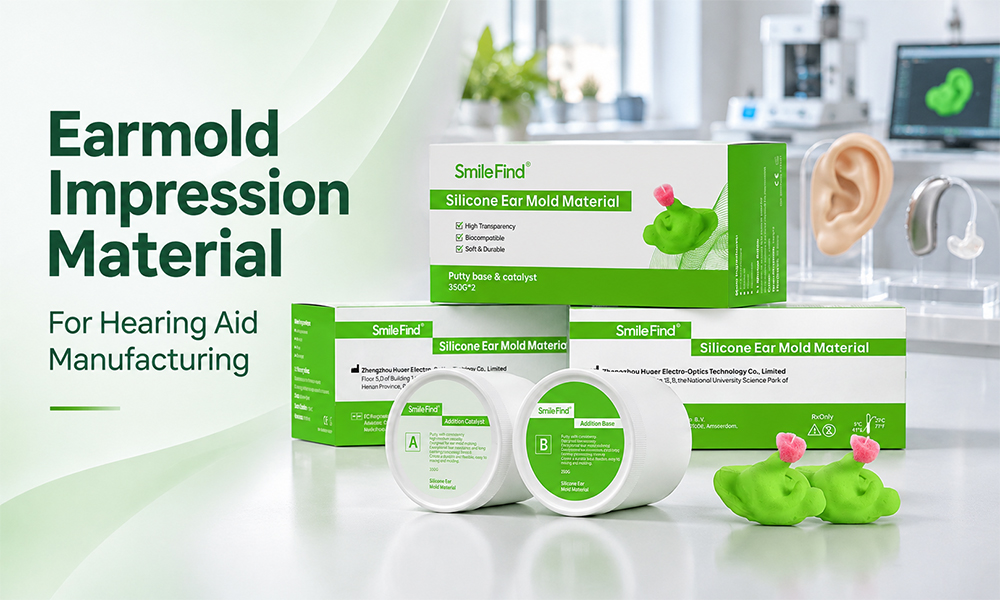
Custom hearing aids and earmolds are designed to fit the individual shape of a person’s ear. To achieve an appropriate fit, manufacturers and hearing care professionals need an accurate representation of the outer ear and ear canal. This is where earmold impression material plays an important role.
Earmold impression material is used to create a physical impression of the ear. The resulting impression can serve as a reference for producing a model, which is then used in the manufacturing of custom earmolds and certain custom-fit hearing device components.
For hearing aid manufacturers, audiology clinics, earmold laboratories, and medical supply distributors, understanding the material’s properties and applications is important when selecting suitable products.
In this guide, we explain what earmold impression material is, how it is used in hearing aid manufacturing, which properties buyers should evaluate, and what to consider when sourcing an earmold impression kit.
What Is Earmold Impression Material?
Earmold impression material is a specialized material used to capture the shape and contours of the outer ear and ear canal. After the material is prepared and allowed to set according to its instructions, it forms a negative impression of the ear’s structure.
This impression provides a physical reference for subsequent model-making and custom earmold production.
Unlike materials used to manufacture the final earmold itself, earmold impression material is used during the impression-taking stage. It helps transfer the shape of an individual’s ear into a form that can be used by an earmold laboratory or manufacturing facility.
The Role of Ear Impression Material
In custom hearing aid production, individual ear anatomy is an important consideration. Ear shapes and ear canal dimensions vary from person to person, so a standardized component may not provide the same fit as a customized solution.
Ear impression material helps capture the required anatomical details for the next manufacturing stages.
Its main roles include:
Capturing the contours of the outer ear and ear canal
Creating a negative impression for model production
Providing a reference for custom earmold manufacturing
Supporting the development of certain custom-fit hearing device components
Helping laboratories reproduce individual ear shapes during the production process
The accuracy and usability of an impression depend on several factors, including the material properties, professional technique, and handling conditions.
Common Types of Earmold Impression Materials
Silicone-based materials are commonly used in professional ear impression applications. Different silicone systems may have different curing mechanisms and handling characteristics.
Examples include:
Addition-cure silicone: Also known as vinyl polysiloxane (VPS) in dental and related impression applications, addition-cure silicone is a material system used in precision impression products. Its suitability for a specific ear impression application should be confirmed through the product’s intended-use documentation.
Condensation-cure silicone: This is another silicone curing system. Its formulation and setting characteristics differ from addition-cure materials.
When selecting an earmold impression material, buyers should not rely on the material category alone. They should also review the product’s intended application, technical specifications, instructions for use, and supporting documentation.
What Is Earmold Impression Material Used for in Hearing Aid Manufacturing?
The primary purpose of earmold impression material is to capture an individual’s ear shape for custom manufacturing.
The impression is an early-stage input in the production process. It is not the final hearing aid or earmold component.
Creating Custom Earmold Impressions
Custom earmolds are designed around the shape of an individual’s ear.
A professional ear impression provides the negative form needed for subsequent model-making. The laboratory can use this reference to develop a positive model or another suitable manufacturing reference.
The resulting model helps guide the production of an earmold designed for the intended application.
Depending on the device and manufacturing workflow, the final product may be made from a different material than the original impression material.
Supporting Custom Hearing Aid Shell Production
Some hearing devices require components that are shaped according to the user’s ear anatomy.
For example, in-the-ear (ITE) hearing aids are designed to fit within the ear, while behind-the-ear (BTE) hearing aids may use a custom earmold connected to the main device through tubing.
An ear impression can provide an important reference for these custom-fit components.
The exact production process varies according to the hearing aid design, manufacturer, and laboratory workflow. Some facilities may use physical models, while others incorporate digital scanning and computer-aided manufacturing.
Supporting Custom-Fit Hearing Protection Products
Ear impressions are also used in certain custom-fit hearing protection applications.
For example, custom earplugs and other individually fitted products may require an impression of the user’s ear as part of their development process.
However, not every earmold impression material is suitable for every application. Buyers should confirm that the product’s intended use, technical documentation, and applicable requirements match the specific product being manufactured.
How Does the Earmold Impression Process Work?
The earmold impression process generally involves professional assessment, material preparation, impression taking, curing, and inspection.
The exact procedure depends on the material system, equipment, and applicable professional standards.
Step 1 – Ear Examination and Preparation
Before an impression is taken, the ear must be examined by an appropriately trained professional.
The professional evaluates the ear canal and surrounding structures to determine whether impression taking is appropriate. Any required protective measures and clinical procedures must follow applicable professional guidance.
This step is essential because ear impression procedures involve the ear canal and require appropriate training and precautions.
Step 2 – Impression Material Preparation
The material is prepared according to the manufacturer’s instructions.
Depending on the product, this may involve combining two components or using a ready-to-use dispensing system.
Important considerations include:
Correct component ratio, when applicable
Uniform mixing
Working time
Material consistency
Product temperature and storage conditions, where specified
Incorrect preparation may affect the material’s setting behavior and the quality of the resulting impression.
Step 3 – Creating the Ear Impression
The impression is created by a trained professional using an appropriate technique and equipment.
The material must be suitable for the intended application and handled according to its instructions for use.
The objective is to capture the required ear contours while following the relevant safety procedures.
This is a professional procedure and should not be attempted by untrained individuals.
Step 4 – Curing and Impression Removal
After application, the material is allowed to set according to the manufacturer’s specified setting time.
The professional confirms that the material has reached the appropriate stage before removing the impression.
Removal must be performed carefully and in accordance with professional procedures. The material’s elasticity and handling properties can be relevant to this stage.
Step 5 – Impression Inspection and Laboratory Processing
After removal, the impression is inspected for completeness and visible defects.
Depending on the manufacturing workflow, it may then be sent to an earmold laboratory for model production or digital processing.
The impression serves as a reference for the next stage of custom manufacturing.
Key Properties to Consider When Choosing Earmold Impression Material
Not all impression materials have the same formulation or handling characteristics. For hearing care suppliers and earmold manufacturers, evaluating technical specifications is an important part of product selection.
Viscosity and Material Consistency
Viscosity affects how a material flows and behaves during application.
Different formulations may be designed for different handling requirements. The appropriate consistency depends on the intended application and the professional procedure.
Buyers should review the manufacturer’s technical information rather than assuming that all silicone impression materials have the same viscosity or application characteristics.
Working Time and Setting Time
Working time and setting time are two important specifications.
Working time refers to the period during which the material can be handled and applied according to its instructions.
Setting time refers to the time required for the material to reach the specified set condition.
These values can influence workflow planning in professional settings.
When comparing products, buyers should check the stated test conditions and measurement methods, as setting times may vary depending on the formulation and environmental conditions.
Elasticity and Dimensional Stability
After setting, an impression material should have properties suitable for its intended removal, handling, and subsequent processing.
Elasticity is relevant to the removal of an impression from the ear, while dimensional stability is important for maintaining the impression’s shape during handling and transfer.
The required performance should be evaluated using the manufacturer’s technical data and appropriate product testing.
Mixing Ratio and Handling Requirements
Some impression materials require the combination of two components before use.
For these products, the specified mixing ratio and mixing procedure are important.
Buyers should consider:
Base and catalyst configuration
Component weight and packaging
Mixing requirements
Working and setting times
Storage instructions
Product instructions and technical documentation
Clear product specifications can help distributors and professional users evaluate whether a kit is suitable for their workflow.
What Should Buyers Look for in an Earmold Impression Kit?
For hearing care suppliers, earmold laboratories, and distributors, choosing an earmold impression kit involves more than comparing the product name or package price.
The kit should match the intended application and provide clear information about its materials, configuration, and handling requirements.
Material Specifications and Product Consistency
Start by reviewing the material type and its technical specifications.
Important information may include:
Material composition or material system
Viscosity or consistency
Working time and setting time
Mixing ratio, if applicable
Elasticity and dimensional stability data
Storage conditions and shelf life
Product consistency between batches is also an important consideration for wholesale buyers who require a stable supply.
Kit Components and Packaging
An earmold impression kit may contain different components depending on the product configuration.
Before purchasing, buyers should confirm:
The amount of impression material included
Whether the product contains one or multiple components
Whether mixing accessories are included
The packaging format
The quantity per box or kit
Storage and handling instructions
Do not assume that every kit contains the same accessories. The actual configuration should be confirmed through the product specification sheet or supplier.
Product Documentation and Quality Control
Documentation helps buyers assess product suitability and manage their purchasing requirements.
Depending on the product and destination market, relevant documents may include:
Product technical data sheet
Safety Data Sheet (SDS)
Instructions for use
Batch identification and traceability information
Applicable quality and regulatory documentation
Distributors should verify that the available documents meet the requirements of their market and intended application.
Supplier Reliability and Wholesale Support
A reliable earmold impression material supplier should provide clear product information and communicate effectively about specifications, packaging, and supply arrangements.
For B2B buyers, additional considerations may include:
Consistent product availability
Clear quotation and order terms
Wholesale packaging options
Product documentation support
Communication during order processing
Custom packaging or private label availability, where offered
Evaluating these factors can help buyers make more informed sourcing decisions.
Disposable Earmold Impression Kit for Professional Applications
For buyers sourcing materials for earmold impression applications, selecting a suitable kit is an important part of product planning.
Smilefind offers disposable earmold impression products for businesses looking for impression materials and related supply options.
A dedicated earmold impression kit can provide a convenient product format for professional supply channels, including hearing care businesses, earmold laboratories, and medical product distributors.
Designed for Earmold Impression Applications
Earmold impression products are intended to support the impression-taking stage of custom earmold production.
When evaluating a kit, buyers should confirm the material type, intended application, instructions for use, and compatibility with their professional workflow.
The product’s specifications should always be reviewed before use.
Product Specifications and Kit Configuration
Product specifications are important when comparing earmold impression kits from different suppliers.
Buyers should confirm details such as:
Material type and product formulation
Net weight or volume
Kit configuration
Packaging format
Working and setting time, where specified
Storage conditions and shelf life
Available technical documentation
For specific specifications and current product configuration, please refer to the product information or contact the Smilefind team.
Wholesale and Supply Options
Smilefind works with B2B customers seeking dental and related impression material products.
Our team can help buyers discuss product information, packaging requirements, and wholesale purchasing inquiries.
To explore available products, visit our Disposable Earmold Impression Products page.
Why Choose Smilefind as Your Earmold Impression Material Supplier?
Selecting an appropriate supplier is an important part of building a stable product supply chain.
For distributors and professional buyers, product information, communication, and supply arrangements can all influence the purchasing decision.
Product Supply for Wholesale Buyers
Smilefind focuses on supplying impression material products for business customers.
We welcome inquiries from distributors, wholesalers, hearing care product suppliers, and other businesses looking for suitable impression material products.
Product Information and Technical Support
Clear product information helps buyers evaluate material suitability and compare available options.
Our team can assist with product inquiries and provide available specifications and documentation for review.
Packaging and Product Customization Inquiries
Packaging requirements may vary between distributors and target markets.
If you require specific packaging arrangements or private label options, contact our team to discuss availability, order requirements, and customization possibilities.
Support for Bulk Purchasing
For wholesale customers, purchasing requirements may involve different product quantities, packaging formats, and delivery arrangements.
Contact Smilefind to discuss your requirements and request product information or a quotation.
Conclusion: Choosing the Right Earmold Impression Material
Earmold impression material plays an important role in custom earmold and hearing aid component manufacturing. It helps capture the shape of the outer ear and ear canal, providing a reference for subsequent model-making and production.
When selecting an earmold impression material, buyers should consider its intended application, material consistency, working and setting times, elasticity, dimensional stability, packaging, and supporting documentation.
For distributors, hearing care suppliers, and earmold laboratories, choosing a suitable product and a reliable supplier can support more consistent sourcing and purchasing decisions.
If you are looking for earmold impression products for wholesale supply, explore Smilefind’s product range and contact our team to discuss your requirements.
Looking for an Earmold Impression Material Supplier?
Explore our Disposable Earmold Impression Products or contact Smilefind for product information and wholesale inquiries.