
The True Cost of Alginate: Boosting Lab Profits with Silicone Putty
In the competitive landscape of modern dentistry, managing operational costs is paramount for any successful dental laboratory or clinic. When it comes to impression materials, the low upfront cost of alginate is often seen as an easy way to protect the bottom line. It’s a staple, a familiar workhorse in countless practices. But is the cheapest material to buy also the most economical material to use? Are there hidden costs—in time, waste, and remakes—that are silently eroding your lab’s profitability?
This comprehensive analysis is designed to look beyond the invoice price. We will delve into the true operational costs of both alginate and modern Silicone Putty (a high-performance VPS material), examining their real-world impact on material waste, workflow efficiency, remake rates, and ultimately, your lab’s overall profitability. This guide is written specifically for a forward-thinking dental lab owner, procurement manager, or decision-maker ready to optimize their cost structure and elevate their business.
The "Real Cost" of Alginate: Uncovering the Hidden Expenditures
Alginate’s primary appeal is undeniable: its low per-unit purchase price. However, a deeper analysis reveals that this initial saving is often negated by a series of operational inefficiencies and hidden costs that accumulate with every single use.
1. The Lure of the Low Purchase Price
Let’s acknowledge it upfront: a tub of alginate powder is significantly cheaper than a kit of silicone putty. When comparing line items on an invoice, alginate appears to be the winner. This fact alone has made it the default choice for decades in applications like study models and orthodontic models. But this is where the financial advantages largely end.
2. The Time Cost: Mixing, Cleaning, and Waiting
Time is the most valuable resource in any lab. Alginate is notoriously time-intensive. The workflow involves manually measuring powder and water, hand-spatulating the mixture in a messy rubber bowl, and then, the significant cleanup of bowls and spatulas. This entire process, when repeated dozens of times a day, translates into substantial labor costs and pulls skilled technicians away from revenue-generating activities.
3. Material Waste: The Uncontrollable Variable
Manual alginate mixing is an art, not a science. It is nearly impossible to achieve the perfect powder-to-water ratio every time, leading to inconsistent results and significant material waste from bad mixes. This constant, low-level waste steadily inflates the “real” cost per impression.
4. The Biggest Cost Black Hole: Dimensional Instability and High Remake Rates
This is the most financially damaging cost of using alginate. As a hydrocolloid, an alginate impression begins to distort from the moment it is removed from the mouth. This poor dimensional stability is the primary cause of inaccurate stone models, which leads to ill-fitting restorations and costly remakes. The cost of one remake—in materials, time, and reputation—can often wipe out the savings from an entire bulk purchase of alginate.
The Long-Term Value of Silicone Putty: An Investment in Precision and Efficiency
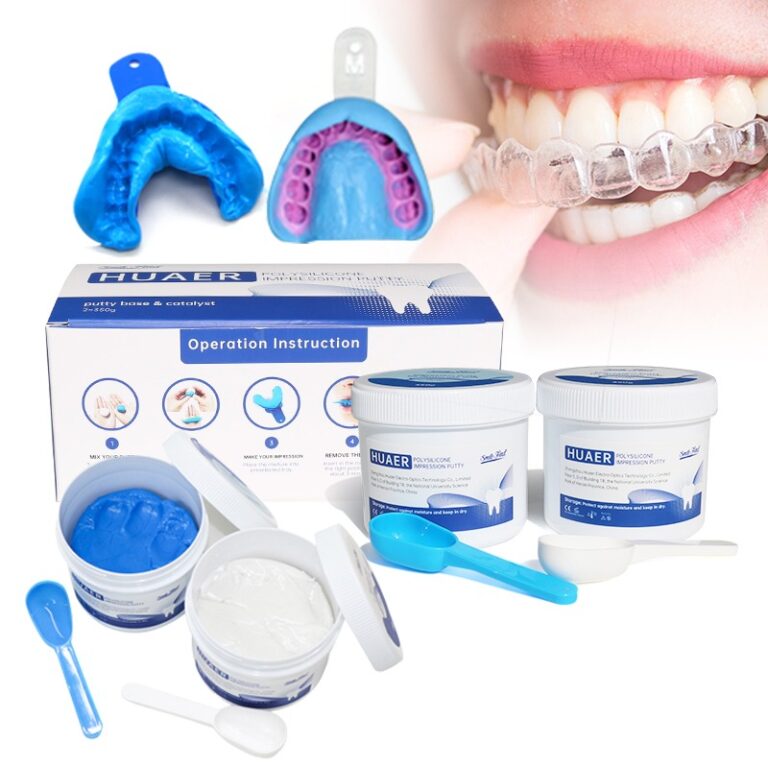
Silicone Putty, a type of Vinyl Polysiloxane (VPS), presents a different financial proposition. While its purchase price is higher than alginate, it should be viewed as a strategic investment in accuracy, efficiency, and waste reduction—the three pillars of a profitable dental lab.
1. A Lower Barrier to High-End Materials
While some VPS systems require expensive dispensing guns, high-quality Silicone Putty offers a more accessible entry point. The primary investment is in the material itself. The clean, simple hand-mixing of a base and catalyst is fast, requires minimal training, and eliminates the need for additional capital equipment, making it a smart choice for labs of all sizes.
2. Precision and Stability: Eliminating Remakes at the Source
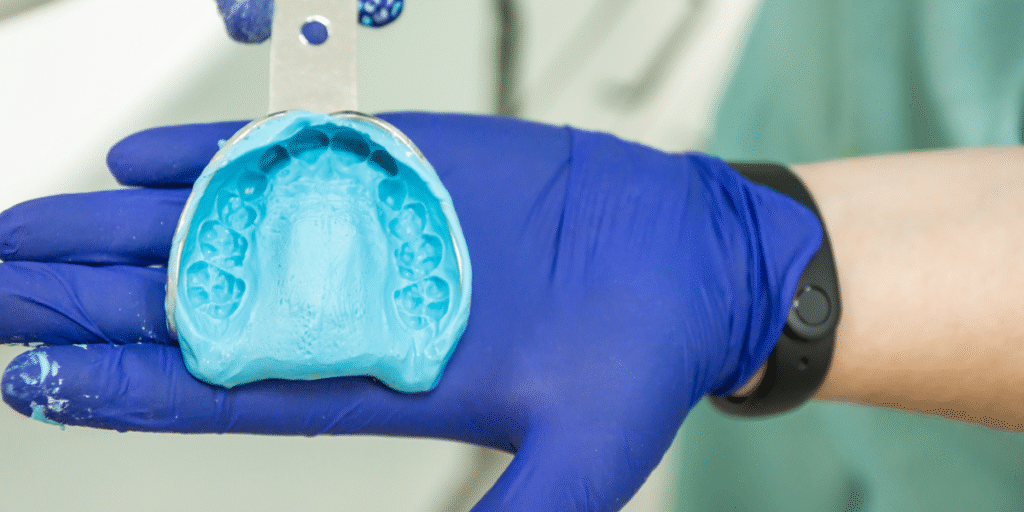
This is the core value proposition of Silicone Putty. As a VPS material, it is exceptionally dimensionally stable. Impressions can be poured days later with no discernible distortion, guaranteeing that the stone model is a perfect replica. By ensuring model accuracy from the very beginning, Silicone Putty fundamentally eliminates the primary cause of costly remakes. This “get it right the first time” approach is the single most effective way to protect your lab’s profit margins.
3. The Efficiency Revolution: Clean, Fast, and Consistent Mixing
The Silicone Putty workflow is a model of efficiency. The simple 1:1 ratio of base and catalyst ensures a perfect, homogenous mix every single time, without the mess and inconsistency of alginate. There is no powder dust, no messy bowls to clean, and the working time is predictable and reliable. This streamlined process reduces the time required for each impression, freeing up technician time for more valuable tasks.
4. The Power of Hydrophilicity: Excellence in a Moist Environment
Like other high-quality VPS materials, our Silicone Putty is hydrophilic. This allows the material to flow effectively and capture fine details even in a moist environment, leading to sharper, clearer impressions and further ensuring the accuracy of the final restoration.
The Ultimate Showdown: Silicone Putty vs. Alginate at a Glance
To simplify the decision-making process, let’s distill our analysis into a clear, business-focused comparison table.
| Feature / Metric | Alginate | Silicone Putty (VPS) |
|---|---|---|
| Initial Purchase Price | Low | Medium |
| True Cost-Per-Impression | Medium (includes waste & remakes) | Low (minimal waste, no remakes) |
| Dimensional Stability | Poor, distorts quickly | Excellent, can be stored long-term |
| Workflow Efficiency | Low (messy manual mix, cleanup) | High (clean hand-mix, no cleanup) |
| Prosthesis Remake Rate | Higher | Extremely Low |
| Impact on Lab Profitability | Erodes Profit Margins | Boosts Profit Margins |
Conclusion: Making the Smartest Choice for Your Business's Future
When viewed through the lens of a business owner, the choice becomes clear. Alginate is “cheap to buy, but expensive to use.” Its low upfront cost lures labs into a cycle of inefficiency, waste, and profit-draining remakes.
Silicone Putty, on the other hand, represents a strategic investment in long-term profitability. It is “more expensive to buy, but far cheaper to use.” The higher initial cost is rapidly offset by dramatic reductions in material waste, the virtual elimination of remakes, and significant gains in workflow efficiency. For any modern dental lab that prioritizes quality, reputation, and financial health, upgrading from alginate to Silicone Putty is an essential business evolution.
Ready To Calculate the ROI For Your Lab?
Take the next step toward a more efficient and profitable workflow.
Related Blog
Inquire Us Now
We will Get Back to You soon