
A Lab's Guide to the Best Dental Thermoforming Materials
For any modern dental lab or clinic, choosing the right thermoforming material is more than just a technical decision—it’s a critical business decision. The market is flooded with options, and selecting the best material for each specific application, from retainers and aligners to night guards, can be a daunting task. The wrong choice doesn’t just lead to a subpar appliance; it leads to frustrated clinicians, dissatisfied patients, and the one thing every lab fears: costly remakes that erode your profit margins and damage your reputation.
This guide is written for forward-thinking dental lab owners, technicians, and procurement managers. We will move beyond “good enough” and provide a professional framework for choosing the absolute best dental thermoforming materials. We will dive deep into the mainstream materials, helping you make the smartest, most profitable choice for every case that comes across your bench.
The Criteria: What Makes a Thermoforming Material the "Best"?
Before diving into specific products, it’s crucial for a lab to establish a clear set of evaluation criteria. A material isn’t just “good”—it’s good for a specific purpose. Here are the five key factors every professional should consider when sourcing their materials.
Biocompatibility & Safety: Is the material certified for intraoral use? Always look for materials that are FDA-approved and/or CE-certified to ensure patient safety and regulatory compliance.
Rigidity vs. Flexibility: Does the application require a rigid material to hold teeth in place (like a retainer), or a soft, flexible material to absorb impact (like a mouthguard)?
Clarity & Aesthetics: For appliances like clear retainers and aligners, optical clarity is non-negotiable. The material must be resistant to staining and remain virtually invisible when worn.
Ease of Use & Fabrication Efficiency: How easy is the material to form, trim, and polish? A material that saves technician time on the bench directly increases a lab’s profitability.
Cost-Effectiveness: This isn’t just the purchase price. The “true cost” of a material includes factors like waste from poor forming and, most importantly, the high cost of remakes. A slightly more expensive but reliable material is almost always more profitable in the long run.
The Core Materials: A Deep Dive
Let’s explore the core materials that form the foundation of most dental labs’ thermoforming operations.
#1: PETG – The Workhorse for Retainers & Hard Splints
PETG (Polyethylene Terephthalate Glycol) is arguably the most widely used rigid material in dental labs today, and for good reason.
Best For: Fabricating crystal-clear, hard appliances like retainers and night guards (occlusal splints).
Advantages: PETG offers an exceptional combination of optical clarity, high rigidity, and excellent dimensional stability. It is also highly cost-effective, making it a profitable choice for high-volume applications like post-orthodontic retainers.
Disadvantages: Its rigidity makes it somewhat brittle. It is not suitable for applications requiring flexibility or the continuous, gentle forces needed for orthodontic tooth movement.
#2: EVA – The Standard for Soft Appliances
EVA (Ethylene Vinyl Acetate) is the go-to material for any application where patient comfort and shock absorption are the primary concerns.
Best For: Crafting soft, flexible appliances such as athletic mouthguards, bleaching trays, and comfortable night guards for patients with light clenching habits.
Advantages: It is exceptionally soft, comfortable for the patient, and easy to form and trim. Its shock-absorbing properties are essential for protecting teeth during sports.
Disadvantages: It is not durable enough to withstand heavy bruxism and will wear down quickly, making it unsuitable for moderate to severe grinders.
#3: TPU (Single-Layer) – The Resilient Aligner Material
TPU (Thermoplastic Polyurethane) has become a key player in the world of orthodontics, known for its unique combination of flexibility and strength.
Best For: Fabricating high-elasticity clear aligners.
Advantages: TPU’s primary benefit is its superior elasticity and tear resistance. It can exert a continuous, gentle force on the teeth, which is essential for effective orthodontic movement, while also being durable enough to last the intended wear cycle.
Disadvantages: The material cost for TPU is typically higher than for PETG, reflecting its advanced properties.
#4: Multi-Layer TPU/Composite – The Premium Solution for Aligners
This category represents the cutting edge of aligner technology, designed for complex cases and premium results.
Best For: Fabricating high-performance, multi-stage clear aligners that require complex tooth movements.
Advantages: These advanced sheets (often your dual-layer TPU) are engineered with multiple layers, typically a rigid outer shell and a more flexible inner layer. This composite structure provides a perfect balance of sustained orthodontic force, exceptional fit, and enhanced patient comfort.
Disadvantages: This is the most premium option, and its higher cost is usually reserved for high-end, comprehensive aligner therapy cases.
Quick Comparison Chart: Which Material is Right for You?
Here is a simple chart to help you quickly reference the best material for your specific application.
Material | Core Application | Rigidity | Key Advantage |
|---|---|---|---|
PETG | Retainers, Hard Splints | Hard | Clear, Precise, Economical |
EVA | Mouthguards, Bleaching Trays | Soft | Comfortable, Shock-Absorbing |
TPU (Single-Layer) | Clear Aligners | Resilient | High Elasticity, Tear-Resistant |
Multi-Layer TPU | High-Performance Aligners | Outer Hard, Inner Resilient | Sustained Force & Comfort |
The SmileFind Solution: A Full Range for Your Lab
Understanding these materials is one thing; sourcing a reliable supply is another.
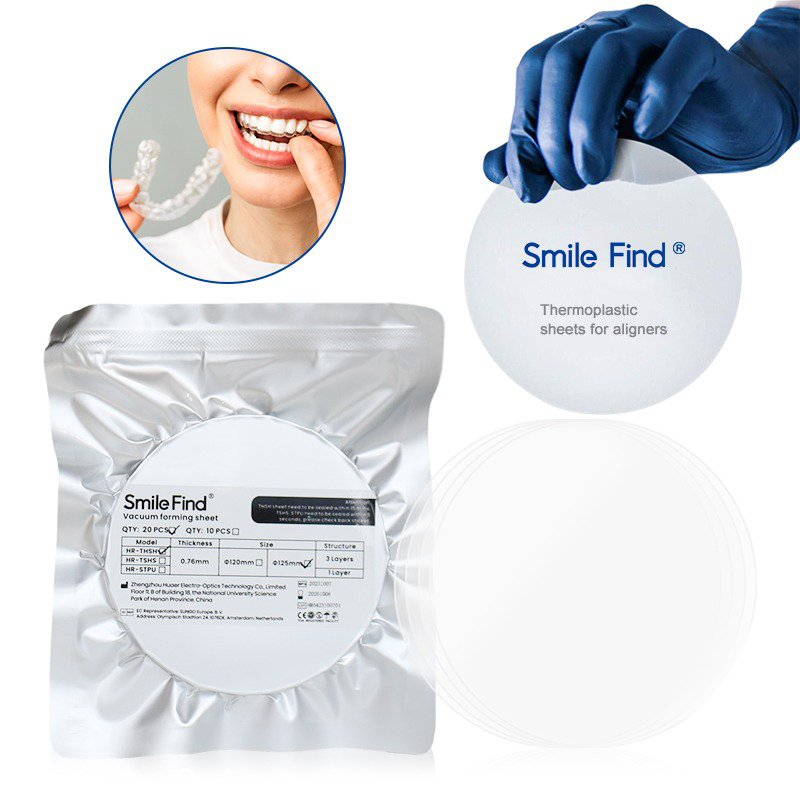
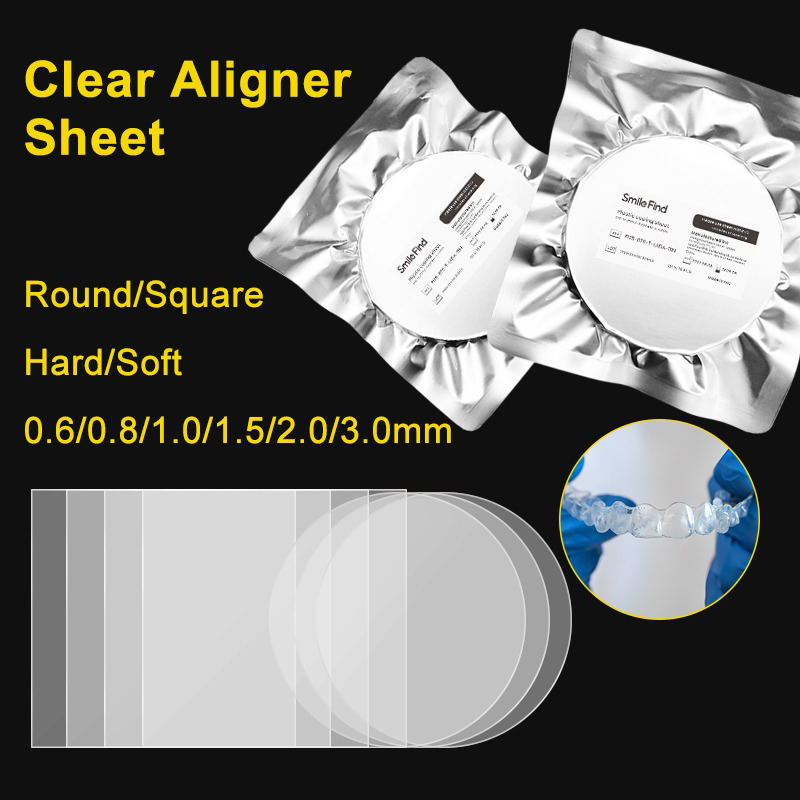
At SmileFind, we provide a complete portfolio of thermoforming solutions designed to cover all the core applications your lab handles daily. Whether you need to produce a high volume of crystal-clear hard PETG retainers, comfortable soft EVA mouthguards, or are expanding your high-end orthodontic services with resilient single-layer TPU and premium multi-layer composite TPU aligner sheets, we offer rigorously tested, high-performance products you can depend on.
All SmileFind materials are FDA and CE-certified, ensuring patient safety. They are engineered for excellent forming results and ease of fabrication, helping you reduce waste and save valuable technician time. As your direct supplier, we are committed to providing competitive wholesale pricing and expert technical support to help your business thrive.
Conclusion: A Smart Choice for a Win-Win Outcome
Choosing the right material for the right application is a win-win decision. It leads to superior clinical outcomes and higher patient satisfaction, which strengthens your relationships with your dental clients. For your lab, it means greater fabrication efficiency, lower remake rates, and ultimately, enhanced profitability.
Related Blog
Inquire Us Now
We will Get Back to You soon