
Why Clear Aligner Demand Is Driving Orthodontic Material Growth
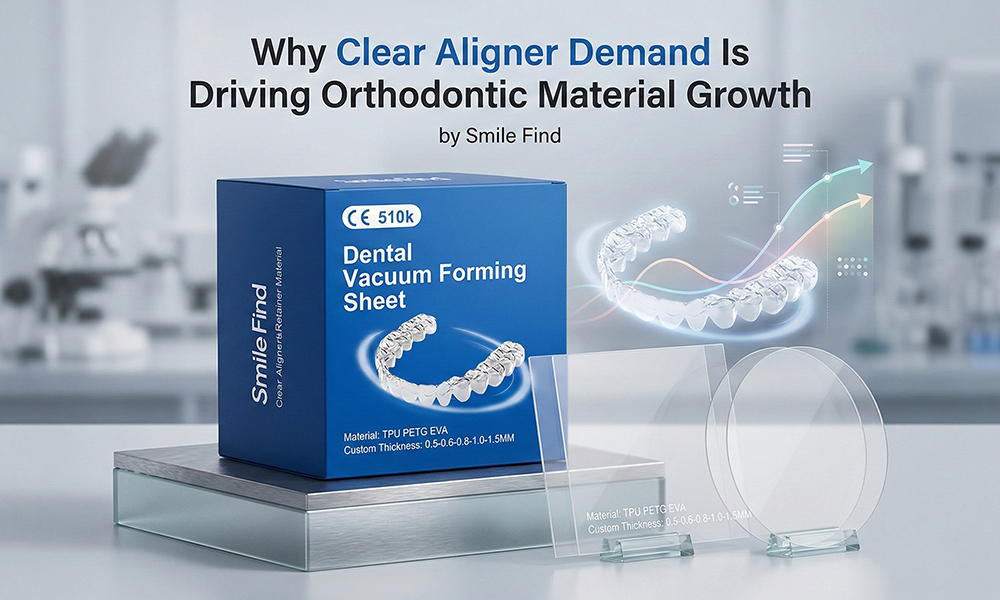
Clear aligner demand is reshaping the orthodontic industry — and it is also driving a rapid increase in demand for orthodontic materials.
Over the past decade, clear aligners have evolved from a niche orthodontic solution into a mainstream treatment option used by clinics worldwide. As more patients choose invisible orthodontic treatments, dental laboratories and aligner manufacturers are scaling production rapidly.
Behind this growth lies an often overlooked factor: the increasing demand for high-quality orthodontic materials, especially dental aligner sheets.
The Rapid Rise of Clear Aligners
Clear aligners have become one of the fastest-growing segments in modern dentistry. Unlike traditional braces, aligners provide a discreet and comfortable treatment option, making them particularly popular among adult patients.
Several factors are accelerating this growth:
Increasing demand for aesthetic orthodontic treatments
Advancements in digital dentistry
Growing awareness of oral health
The expansion of direct-to-consumer orthodontic brands
For dental laboratories and orthodontic clinics, this shift means more aligner cases and higher material consumption.
Why Patients Are Choosing Clear Aligners
The popularity of aligners is largely driven by patient preferences. Compared with traditional braces, clear aligners offer several clear advantages.
Aesthetic Appeal
Clear aligners are nearly invisible when worn. This makes them especially attractive for adults and professionals who prefer a discreet orthodontic solution.
Comfort and Convenience
Unlike metal braces, aligners have smooth edges and can be removed when eating or brushing teeth. Patients experience fewer lifestyle disruptions.
Better Oral Hygiene
Because aligners are removable, patients can maintain normal brushing and flossing routines. This helps reduce the risk of plaque build-up and gum irritation.
These benefits are encouraging more clinics to adopt aligner-focused treatment models.
Digital Orthodontics Is Increasing Material Consumption
Another major driver behind aligner growth is the rise of digital orthodontics.
Modern aligner production typically follows a digital workflow:
Intraoral scanning
Digital treatment planning
3D model printing
Thermoforming aligner sheets
Each aligner case requires multiple sets of aligners, and every aligner is thermoformed from specialised plastic sheets.
As treatment volume increases, the need for reliable orthodontic materials becomes more critical.
Why Aligner Materials Matter
The performance of a clear aligner is heavily influenced by the material used to produce it.
High-quality aligner sheets must provide:
Excellent transparency for aesthetic appearance
Stable orthodontic force for effective tooth movement
Elastic recovery to maintain aligner shape
Durability to prevent cracking or deformation
Common materials used in aligner production include PETG and polyurethane-based thermoplastics. These materials offer a balance of flexibility, strength and clarity.
For dental labs, selecting the right material is essential to ensure consistent treatment outcomes and production efficiency.
Why Dental Labs Need Reliable Aligner Sheet Suppliers
As the clear aligner market expands, dental labs face new operational challenges.
They must produce aligners faster, maintain quality consistency and handle increasing case volumes.
This makes supplier selection extremely important.
Dental laboratories typically look for manufacturers that can provide:
Stable sheet thickness tolerance
Consistent optical clarity
Reliable thermoforming performance
Bulk supply for large-scale production
Working with a professional orthodontic material manufacturer helps labs maintain predictable aligner performance while scaling production capacity.
You can learn more about our manufacturing background and production capabilities here
Supporting Clear Aligner Production with High-Quality Materials
As aligner treatments continue to grow worldwide, manufacturers are developing advanced materials to support orthodontic laboratories.
High-quality dental aligner sheets are designed to deliver:
High transparency for invisible aligners
Consistent orthodontic force
Excellent thermoforming adaptability
Reliable durability during wear
These materials allow dental labs and aligner brands to produce aligners more efficiently while maintaining consistent treatment results.
You can explore our full range of aligner sheet materials here
The Future of Orthodontic Materials
The demand for orthodontic materials is expected to grow alongside advancements in digital dentistry.
Several emerging trends will further drive this growth:
AI-assisted orthodontic treatment planning
Expansion of adult orthodontics
Improved thermoplastic materials
Increased adoption of in-house aligner production by clinics
As the industry evolves, the role of high-performance orthodontic materials will become even more important.
FAQ
What materials are used to make clear aligners?
Most clear aligners are made from medical-grade thermoplastics such as PETG or polyurethane-based materials. These materials provide transparency, flexibility and durability, which are essential for effective orthodontic treatment.
Why are aligner sheets important in orthodontic production?
Aligner sheets are thermoformed over dental models to create each aligner tray. The material quality directly affects the aligner’s clarity, strength and ability to deliver consistent orthodontic force.
How many aligners are typically used in one treatment?
Depending on treatment complexity, a patient may use anywhere from 10 to more than 40 aligners throughout the treatment process. This high volume is one reason why orthodontic material demand continues to grow.
What should dental labs consider when choosing aligner sheet suppliers?
Dental labs should evaluate several factors:
Material transparency
Thickness consistency
Thermoforming performance
Supply stability
Manufacturer reliability
Working with experienced orthodontic material manufacturers ensures consistent production results.
Conclusion
The rapid expansion of clear aligners is transforming orthodontics — and it is simultaneously increasing the demand for specialised orthodontic materials.
For dental laboratories and aligner manufacturers, reliable material supply is essential for maintaining quality, efficiency and scalability.
As digital orthodontics continues to evolve, high-performance aligner sheet materials will remain a critical component in delivering predictable and effective orthodontic treatment.
Related Blog
Inquire Us Now
We will Get Back to You soon