
Multilayer Dental Thermoforming Sheets: Structure, Materials and Applications
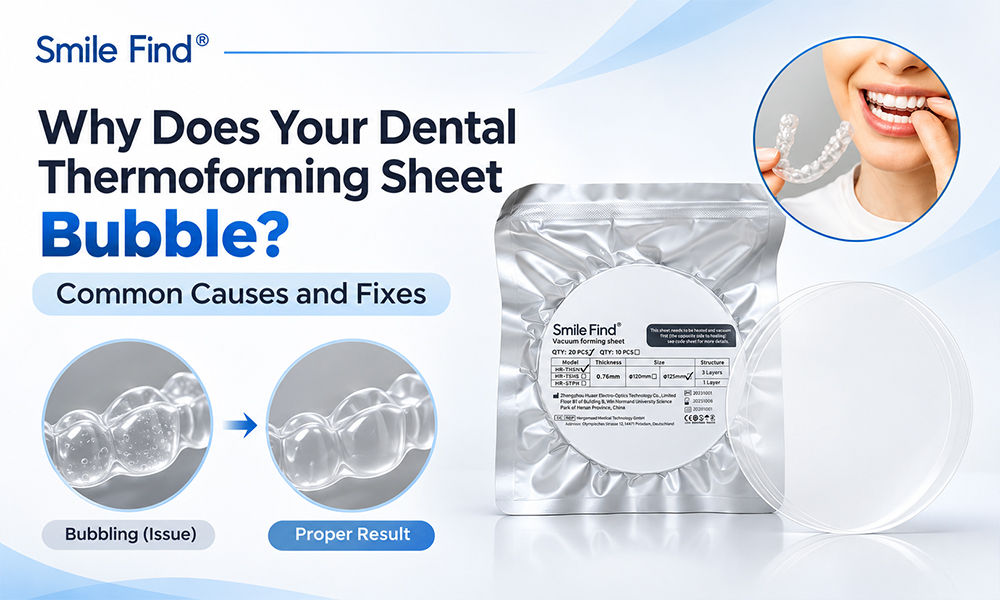
Dental thermoforming materials play an important role in producing clear aligners, orthodontic retainers, and other custom dental appliances. As dental technology continues to develop, manufacturers and dental laboratories are paying closer attention to material structures and performance requirements.
Multilayer Dental Thermoforming Sheets are designed by combining two or more material layers into a single sheet. Each layer can be formulated to contribute different properties, helping manufacturers develop materials that meet specific application requirements.
But what makes multilayer sheets different from conventional single-layer materials? Which polymers are commonly used? And what should dental laboratories and distributors consider when sourcing these products?
In this guide, we will explore the structure, material combinations, applications, and key purchasing considerations for multilayer dental thermoforming sheets.
What Are Multilayer Dental Thermoforming Sheets?
Multilayer dental thermoforming sheets are plastic sheets made by integrating two or more material layers into one structure. Unlike single-layer sheets, which use one primary material layer, multilayer sheets combine different materials or formulations to achieve a particular balance of physical and processing properties.
These sheets are commonly developed for dental applications where several material characteristics need to be considered together, such as flexibility, stiffness, transparency, toughness, and thermoforming performance.
Understanding the Multilayer Sheet Structure
A multilayer sheet may contain two, three, or more layers, depending on its design and intended application.
A typical three-layer structure may include:
- Outer Layer: Designed to provide specific surface properties, such as appearance, surface quality, or resistance to handling-related wear.
- Core Layer: May contribute to the overall mechanical properties, flexibility, or structural performance of the sheet.
- Inner Layer: Can be formulated to support the required surface characteristics and overall material performance.
The actual function of each layer depends on the polymer formulation, layer thickness, and manufacturing process. Not every multilayer dental sheet follows the same structure.
The main purpose of this design is to combine selected material properties within one thermoforming sheet rather than relying on a single polymer formulation.
How Are Multilayer Dental Sheets Manufactured?
Multilayer dental thermoforming sheets can be produced using different manufacturing technologies, including co-extrusion and lamination.
Co-extrusion combines multiple polymer layers during the extrusion process. Different materials or formulations are introduced through specialized equipment and integrated into a single sheet.
Lamination involves bonding separately prepared material layers together using an appropriate process.
The suitable manufacturing method depends on material compatibility, product design, required layer structure, and production capabilities.
For dental applications, consistent layer integration is important. Poor bonding or uneven material distribution may affect the sheet’s appearance, processing behavior, and final product quality.
Single-Layer vs. Multilayer Dental Thermoforming Sheets
One of the most important considerations when selecting dental thermoforming materials is whether a single-layer or multilayer structure is more suitable for the intended application.
Both types have their own advantages and limitations. The right choice depends on the required material properties, manufacturing process, and final dental appliance.
What Are Single-Layer Dental Thermoforming Sheets?
Single-layer dental thermoforming sheets are made from one primary polymer material or formulation.
Common materials used in dental thermoforming include PETG, TPU, EVA, and other thermoplastic materials, depending on the application.
Because the sheet has a relatively simple structure, its material characteristics are primarily determined by the selected polymer and its formulation.
Potential benefits include:
A relatively straightforward material structure
Simpler material composition
Established processing options for specific applications
Easier specification and quality control in some production settings
Single-layer sheets can be suitable for many dental applications when one material formulation already meets the required performance specifications.
What Makes Multilayer Dental Thermoforming Sheets Different?
Multilayer dental thermoforming sheets combine different material layers to achieve specific design objectives.
For example, a manufacturer may combine a relatively rigid polymer layer with a more flexible material layer to adjust the overall mechanical behavior of the sheet.
Potential characteristics of multilayer designs include:
Multiple material properties within one sheet
Greater flexibility in material design
The ability to adjust layer composition and thickness
Opportunities to develop application-specific material structures
However, multilayer construction also introduces additional manufacturing considerations. Material compatibility, bonding strength, layer uniformity, and processing consistency must all be controlled.
Key Differences Between Single-Layer and Multilayer Sheets
The following table summarizes their general structural differences.
| Comparison | Single-Layer Sheets | Multilayer Sheets |
|---|---|---|
| Structure | One primary material layer | Two or more integrated layers |
| Composition | One polymer or formulation | Multiple materials or formulations |
| Material design | Properties determined mainly by one formulation | Properties designed through layer combinations |
| Manufacturing | Relatively straightforward structure | Requires controlled layer integration |
| Quality control | Focuses on material and sheet consistency | Also requires layer bonding and distribution control |
| Applications | Depends on the selected polymer | Depends on the overall layer design |
It is important to understand that multilayer sheets are not automatically better than single-layer sheets. A well-designed single-layer material may perform very effectively in its intended application.
The key is to select a structure that matches the requirements of the dental appliance and the thermoforming process.
Common Material Combinations in Multilayer Dental Thermoforming Sheets
The performance of multilayer dental thermoforming sheets depends heavily on the materials used in each layer.
Different polymers have different mechanical, thermal, and optical characteristics. By combining compatible materials, manufacturers can develop sheets for specific dental applications.
PETG and TPU Multilayer Sheets
PETG and TPU are two thermoplastic materials used in dental thermoforming applications.
PETG (Polyethylene Terephthalate Glycol) is a transparent copolyester commonly used in dental thermoforming. Depending on its grade and formulation, it can offer good transparency, rigidity, and processing characteristics.
TPU (Thermoplastic Polyurethane) is a flexible thermoplastic elastomer. Its properties vary depending on its chemical composition and hardness grade. It can provide elasticity, flexibility, and toughness.
When PETG and TPU are combined in a multilayer structure, the design may aim to balance properties associated with both materials.
For example, a specific layer arrangement may be developed to combine the dimensional or structural characteristics of a copolyester with the flexibility of an elastomeric layer.
However, the actual performance depends on the specific grades, layer proportions, bonding technology, and processing conditions. Not all PETG and TPU combinations are compatible or suitable for dental applications.
Copolyester and Thermoplastic Elastomer Combinations
Besides PETG and TPU, manufacturers may explore other copolyester and thermoplastic elastomer combinations.
These combinations can be designed to adjust:
Overall stiffness and flexibility
Material toughness
Transparency and appearance
Thermoforming behavior
Performance requirements for specific appliances
Material selection should be based on the intended application and verified product specifications rather than the polymer names alone.
How Layer Thickness Affects Overall Sheet Performance
Layer thickness is another important factor in multilayer dental thermoforming sheets.
A multilayer sheet has a total thickness made up of its individual layers. Changing the thickness or proportion of each layer may influence the overall behavior of the material.
When evaluating a multilayer sheet, buyers should consider:
Total Sheet Thickness: The overall thickness determines the starting material dimensions and must be compatible with the intended application and forming equipment.
Individual Layer Thickness: The thickness of each layer affects how much it contributes to the overall structure.
Layer Proportion: Different layer ratios may result in different material characteristics, even when the same polymers are used.
Thickness Uniformity: Consistent thickness across the sheet is important for predictable processing and product quality.
It is also worth noting that the thickness of a thermoformed dental appliance may differ from the original sheet thickness. Heating and forming can cause material redistribution, with some areas becoming thinner than others.
For this reason, buyers should evaluate both the original sheet specifications and the performance of the finished appliance.
Applications of Multilayer Dental Thermoforming Sheets
Multilayer dental thermoforming sheets can be developed for different orthodontic and dental applications. Their suitability depends on the material structure, mechanical properties, thickness, and validated performance.
Multilayer Sheets for Clear Aligners
Clear aligners are custom-made orthodontic appliances designed to apply controlled forces to teeth.
Material selection is important because clear aligners require a combination of characteristics, including:
Appropriate transparency
Suitable flexibility and stiffness
Consistent thermoforming performance
Adequate mechanical properties
Reliable fit and dimensional behavior
Multilayer aligner sheets may be designed to combine different material characteristics in one structure.
For dental laboratories and aligner manufacturers, it is important to evaluate how a specific multilayer material performs after thermoforming, trimming, and actual appliance fabrication.
Multilayer Sheets for Orthodontic Retainers
Orthodontic retainers help maintain tooth positions after orthodontic treatment.
Thermoformed retainers require materials with suitable strength, formability, and dimensional stability for their intended use.
Depending on the product design, multilayer sheets may offer an additional approach to balancing material properties.
When selecting materials for retainers, dental laboratories should consider:
Required sheet thickness
Appliance design
Material stiffness and flexibility
Transparency requirements
Forming and finishing characteristics
The most suitable material should be determined through product specifications and practical testing.
Other Potential Dental Applications
Depending on their composition and verified performance, multilayer dental thermoforming materials may also be considered for other custom dental appliances.
However, not every multilayer sheet is suitable for every application. Buyers should confirm the intended use, material compliance, and manufacturer recommendations before selecting a product.
Key Specifications to Check When Buying Multilayer Dental Thermoforming Sheets
For dental laboratories, distributors, and dental material importers, purchasing multilayer dental thermoforming sheets involves more than comparing prices.
Product specifications, manufacturing consistency, and application compatibility all affect the long-term value of a supplier relationship.
Here are five important factors to evaluate.
Total Thickness and Layer Thickness
Thickness is one of the first specifications to check.
Buyers should confirm:
Total sheet thickness
Available thickness options
Thickness tolerance
Individual layer thickness or ratio, where disclosed
Sheet dimensions and shape
Consistent thickness is important for stable material handling and predictable thermoforming results.
If your business requires a specific appliance design or production process, ask the manufacturer whether customized thickness specifications are available.
Material Composition and Transparency
The material composition directly influences the sheet’s properties.
Before purchasing, confirm:
Which polymers are used
Whether the sheet is single-layer or multilayer
Whether material grades are documented
What transparency and appearance specifications are available
Whether the material is intended for your application
For clear aligner production, transparency is an important consideration. However, the final appearance also depends on the material grade, forming conditions, surface quality, and finishing process.
Thermoforming Compatibility
A dental thermoforming sheet must be compatible with the equipment and production process used by the dental laboratory.
Important considerations include:
Recommended heating conditions
Forming temperature range
Vacuum or pressure-forming compatibility
Cooling requirements
Material behavior during forming
Buyers should request technical data and processing recommendations from the manufacturer.
It is also advisable to test samples using the actual thermoforming equipment before placing a large-volume order.
Bonding Quality and Layer Stability
For multilayer dental thermoforming sheets, layer integration is a critical quality factor.
Poor bonding or inconsistent layer distribution may lead to defects during storage, handling, or processing.
Buyers should ask manufacturers about their quality control procedures for:
Layer bonding strength
Layer thickness consistency
Surface defects
Delamination resistance
Batch-to-batch consistency
Sample evaluation and documented quality checks can help reduce purchasing risks.
Packaging, Certifications, and Quality Control
Packaging and quality documentation are also important for international B2B purchasing.
Before confirming an order, buyers should review:
Individual sheet packaging
Bulk packaging options
Product identification and labeling
Applicable certificates and compliance documentation
Quality inspection procedures
Production lead time and supply capacity
For distributors and private-label customers, customized packaging and branding may also be important.
Always verify that certificates and compliance documents apply to the specific product and intended market.
How to Choose a Reliable Multilayer Dental Thermoforming Sheets Manufacturer
Finding a reliable manufacturer is essential for dental distributors, importers, and laboratories that require consistent product quality and long-term supply.
A suitable supplier should provide more than competitive pricing. Technical support, specification transparency, and production consistency are also important.
Consistent Material Quality
A professional manufacturer should have established procedures for inspecting raw materials and finished products.
For multilayer sheets, quality control should cover both the overall sheet and the individual layer structure.
Ask potential suppliers how they manage thickness tolerances, material consistency, and layer bonding.
Custom Thickness and Material Options
Different dental applications may require different sheet dimensions, thicknesses, and material combinations.
If your business has specific requirements, discuss available customization options with the manufacturer.
These may include:
Sheet thickness
Sheet dimensions
Material composition
Layer structure
Packaging specifications
The available options depend on the manufacturer’s actual production capabilities.
OEM and Private Label Services
For dental material distributors and brand owners, OEM and private-label services can help create products under their own brand identity.
Depending on the supplier’s capabilities, services may include:
Customized product packaging
Private-label branding
Customized labeling
Bulk order arrangements
Product specification coordination
Before starting a private-label project, confirm minimum order quantities, artwork requirements, production lead times, and quality documentation.
Technical Support and Sample Evaluation
A reliable supplier should be able to provide relevant product information and support during the evaluation process.
Before placing a bulk order, request samples and assess their compatibility with your production equipment and intended dental application.
Testing can help evaluate material appearance, forming behavior, thickness consistency, and finished appliance quality.
Frequently Asked Questions About Multilayer Dental Thermoforming Sheets
1. What Are Multilayer Dental Thermoforming Sheets Made Of?
Multilayer dental thermoforming sheets are made by combining two or more material layers. Depending on the design, these may include PETG, TPU, copolyesters, thermoplastic elastomers, or other compatible polymers.
The exact composition varies by manufacturer and product specification.
2. What Is the Difference Between Single-Layer and Multilayer Dental Sheets?
Single-layer dental sheets use one primary material layer, while multilayer sheets combine two or more layers.
Multilayer construction allows manufacturers to design different material properties within one sheet. However, the best option depends on the intended dental application and required performance.
3. Are PETG and TPU Commonly Used in Multilayer Aligner Sheets?
PETG and TPU are both used in dental thermoforming applications and may be combined in certain multilayer designs.
Their combination can be intended to balance different material characteristics, but actual performance depends on polymer grades, layer proportions, bonding quality, and processing conditions.
4. How Does Layer Thickness Affect Multilayer Dental Thermoforming Sheets?
The thickness of each layer and the overall sheet thickness can influence the mechanical and processing characteristics of the material.
A different layer ratio may produce different results, even when the same polymers are used.
Buyers should review total thickness, individual layer specifications where available, and the performance of the finished thermoformed appliance.
5. What Should Buyers Look for When Sourcing Multilayer Dental Thermoforming Sheets?
Buyers should evaluate material composition, total thickness, layer structure, bonding quality, transparency, thermoforming compatibility, packaging, and quality control.
For bulk purchasing, it is also important to confirm production capacity, lead time, customization options, and applicable compliance documentation.
Conclusion
Multilayer dental thermoforming sheets provide manufacturers with another approach to designing materials for orthodontic and dental applications.
By combining different polymers or formulations, multilayer structures can be developed to meet specific requirements for flexibility, stiffness, transparency, and thermoforming performance.
However, selecting the right product requires careful evaluation of material composition, layer thickness, bonding quality, and compatibility with the intended production process.
For dental laboratories, aligner manufacturers, and distributors, working with an experienced dental thermoforming sheet manufacturer can help ensure more consistent specifications and reliable bulk supply.
Looking for dental thermoforming sheets for your business?
Contact SmilefindDent to discuss your product requirements, material options, sheet specifications, and bulk purchasing needs. Our team can help you explore suitable solutions for your dental thermoforming applications.
Inquire Us Now
We will Get Back to You soon
Note: This form is dedicated to distributors and wholesale / custom requests. Individual customers are warmly welcome to visit our Express Shop.
*We respect your privacy. Your information is safe and will never be shared.