
Why Does Your Dental Thermoforming Sheet Bubble? Common Causes and Fixes
Dental thermoforming sheets are widely used in dental laboratories for manufacturing clear aligners, retainers, night guards, and other thermoformed dental appliances. During the thermoforming process, some labs may encounter a common issue: bubbles appearing on the sheet surface after heating and forming.
A Dental Thermoforming Sheet Bubble can affect the transparency, surface quality, and overall appearance of the final dental appliance. For dental labs and orthodontic manufacturers, understanding why bubbles occur and how to prevent them is essential for maintaining consistent production quality.
In most cases, bubbling is caused by factors such as moisture absorption, incorrect heating parameters, machine settings, or inconsistent material quality. This guide explains the common causes of thermoforming sheet bubbles and practical solutions to improve thermoforming results.
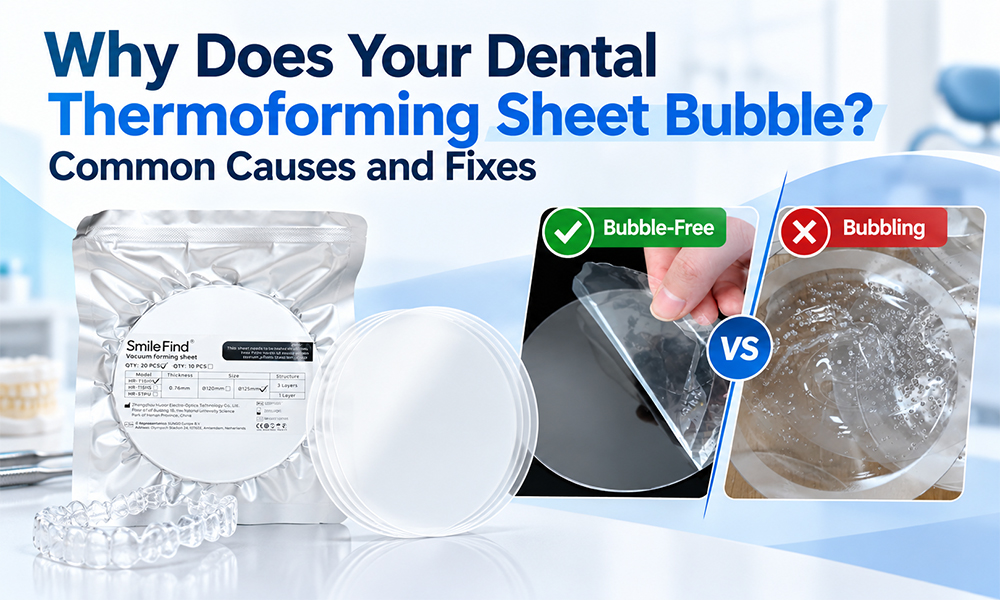
What Causes a Dental Thermoforming Sheet Bubble?
A bubble in a dental thermoforming sheet is usually created when gas or moisture inside the polymer expands during the heating process. Since thermoforming requires heating the sheet to a softened state, any trapped moisture, air, or material stress may become visible as bubbles.
The main causes include:
- Moisture absorption during storage
- Incorrect heating temperature
- Uneven heating from the thermoforming machine
- Poor material quality or manufacturing issues
Understanding these factors can help dental laboratories identify problems faster and reduce material waste.
1. Moisture Absorption During Storage
One of the most common reasons for a Dental Thermoforming Sheet Bubble is moisture absorbed before processing.
Dental thermoforming materials, including PETG and TPU sheets, can absorb moisture from the surrounding environment. When a moisture-containing sheet is heated, the absorbed water may turn into vapor and expand inside the material, creating visible bubbles.
Common storage-related causes include:
- Opened packages exposed to humid environments
- Improper storage after removing sheets from packaging
- Long-term exposure to air without protection
- Storage near heat sources or direct sunlight
How to prevent moisture-related bubbles:
- Keep sheets in their original sealed packaging before use
- Store materials in a dry and stable environment
- Reseal opened packages after removing sheets
- Avoid unnecessary exposure to humidity
Proper storage is especially important for dental labs that purchase thermoforming sheets in bulk quantities.
2. Incorrect Heating Temperature
Another major cause of thermoforming sheet bubbles is incorrect heating during the forming process.
Each material has its own processing characteristics. Applying excessive heat or extending the heating time beyond recommended limits may cause polymer degradation or internal expansion.
Overheating may result in:
- Surface bubbles
- Reduced transparency
- Uneven thickness
- Material deformation
- Poor fitting performance
For example, PETG dental thermoforming sheets and TPU aligner sheets may require different heating conditions due to their different polymer structures.
Dental laboratories should always follow the recommended thermoforming parameters provided by the material manufacturer.
Tips for better heating control:
- Avoid overheating the sheet
- Check machine temperature accuracy regularly
- Follow recommended heating cycles
- Test new materials before full-scale production
3. Uneven Heating During Thermoforming
Sometimes, the problem is not the thermoforming sheet itself but the thermoforming equipment.
If the heating system does not distribute heat evenly, certain areas of the sheet may become overheated while others remain insufficiently softened.
Possible causes include:
- Aging heating elements
- Incorrect machine calibration
- Uneven distance between heating source and sheet
- Improper sheet positioning
Signs of uneven heating:
- Localized bubbles in specific areas
- Uneven forming results
- Wrinkles or surface defects
- Different thickness across the formed appliance
Solutions:
Dental labs can reduce these issues by:
- Checking thermoforming machine calibration
- Maintaining equipment regularly
- Ensuring correct sheet placement
- Using consistent heating procedures
A properly maintained thermoforming machine is essential for stable production quality.
4. Poor Material Quality or Manufacturing Issues
Material consistency also plays an important role in preventing bubbles.
Low-quality dental thermoforming sheets may have problems related to production processes, including:
- Excessive internal moisture
- Inconsistent thickness
- Poor polymer processing
- Uneven material structure
These issues can affect forming performance even when the machine settings are correct.
When selecting a Dental Thermoforming Sheet Supplier, dental laboratories should consider:
- Raw material quality
- Production control standards
- Thickness consistency
- Quality inspection procedures
- Technical support availability
Reliable manufacturing processes help ensure stable thermoforming performance from batch to batch.
How to Prevent Bubble Problems in Dental Thermoforming Sheets?
Preventing bubbles requires a combination of proper material storage, correct machine settings, and selecting reliable dental thermoforming materials.
1. Store Dental Thermoforming Sheets Properly
Correct storage helps maintain the original performance of thermoforming materials.
Recommended practices include:
- Keep sheets inside sealed packaging before use
- Store materials in a controlled environment
- Protect sheets from humidity and direct sunlight
- Avoid storing materials in areas with large temperature changes
For dental laboratories purchasing bulk quantities, proper inventory management is especially important to prevent moisture-related issues.
2. Follow Correct Thermoforming Parameters
Different materials require different thermoforming conditions.
Before production, dental labs should confirm:
| Factor | Recommendation |
|---|---|
| Heating temperature | Follow manufacturer guidelines |
| Heating time | Avoid excessive heating |
| Machine condition | Maintain regular calibration |
| Material handling | Keep sheets clean and dry |
Using correct parameters helps maintain:
- Surface clarity
- Material strength
- Consistent thickness
- Accurate appliance forming
3. Choose Reliable Dental Thermoforming Sheet Manufacturers
Material selection is another key factor in reducing production problems.
A professional Dental Thermoforming Sheet Manufacturer should provide:
- Stable material performance
- Consistent thickness control
- Reliable packaging
- Quality inspection
- Support for different dental applications
For orthodontic labs and distributors, working with a reliable supplier helps ensure predictable production results and reduces unnecessary material loss.
Bubble Issues in Different Dental Thermoforming Materials
Different thermoforming materials have different characteristics. Understanding their properties helps dental professionals choose the right material and processing conditions.
PETG Dental Thermoforming Sheets
PETG is commonly used for:
- Clear retainers
- Orthodontic appliances
- Dental trays
Because PETG provides good transparency and forming performance, it is widely used in dental laboratories.
However, improper storage or excessive moisture exposure may affect forming quality.
Recommended practices:
- Keep sheets sealed before use
- Control storage humidity
- Follow suitable heating parameters
TPU Dental Thermoforming Sheets
TPU aligner sheets are widely used for clear aligner manufacturing due to their flexibility and elasticity.
TPU materials require careful processing because heating conditions can influence:
- Elastic recovery
- Transparency
- Surface quality
To achieve stable results:
- Use appropriate heating settings
- Maintain proper storage conditions
- Avoid overheating
EVA Dental Thermoforming Sheets
EVA sheets are commonly used for applications such as:
- Sports mouth guards
- Whitening trays
- Protective dental appliances
Similar to other thermoforming materials, proper heating control and storage conditions help maintain consistent forming performance.
Frequently Asked Questions About Dental Thermoforming Sheet Bubble
Why does my dental thermoforming sheet develop bubbles after heating?
A dental thermoforming sheet may develop bubbles due to moisture absorption, excessive heating, uneven temperature distribution, or inconsistent material quality.
Can moisture cause bubbles in PETG dental sheets?
Yes. Moisture absorbed during storage can turn into vapor during heating, which may create visible bubbles inside the PETG sheet.
How can dental labs avoid thermoforming sheet bubbles?
Dental labs can reduce bubble problems by:
- Storing sheets properly
- Using correct heating parameters
- Maintaining thermoforming equipment
- Choosing reliable dental material suppliers
Do PETG and TPU thermoforming sheets require the same heating settings?
No. PETG, TPU, and EVA sheets have different material characteristics and require different thermoforming conditions. Always follow the recommended parameters for each material.
Conclusion
A Dental Thermoforming Sheet Bubble is usually caused by four main factors:
- Moisture absorption during storage
- Incorrect heating temperature
- Uneven machine heating
- Material quality issues
For dental laboratories and orthodontic manufacturers, preventing bubbles requires proper material handling, optimized thermoforming processes, and reliable sheet suppliers.
SmileFind® provides dental thermoforming sheets designed for clear aligners, retainers, and other dental laboratory applications, supporting consistent forming performance with reliable material quality.
Explore SmileFind® dental thermoforming solutions for your orthodontic and dental laboratory needs.
Inquire Us Now
We will Get Back to You soon
Note: This form is dedicated to distributors and wholesale / custom requests. Individual customers are warmly welcome to visit our Express Shop.
*We respect your privacy. Your information is safe and will never be shared.