
How Multi-Layer PMMA Discs Achieve Natural Denture Aesthetics
In modern dentistry, denture aesthetics has become just as important as functionality. Patients no longer accept restorations that simply “work” — they expect natural-looking results that closely resemble real oral tissues.
However, traditional single-layer PMMA discs often fall short. Their uniform color can appear flat and artificial, making it difficult for dental laboratories to achieve lifelike denture bases.
With the advancement of digital dentistry, multi-layer PMMA discs have emerged as a superior solution. Designed to replicate the natural color transitions of gingival tissue, these materials are transforming how dental labs approach denture fabrication.
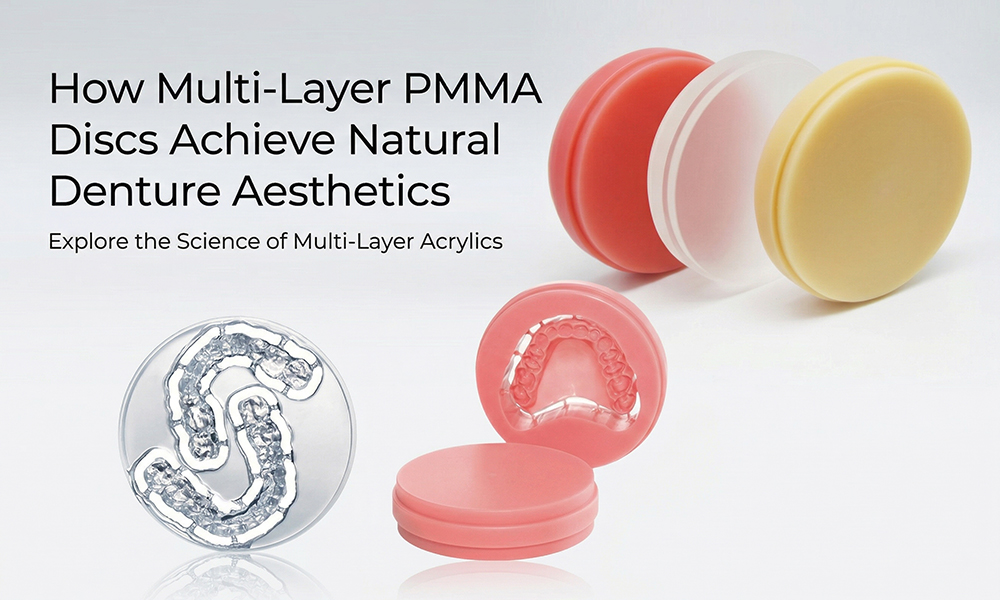
What Are Multi-Layer PMMA Discs?
PMMA (polymethyl methacrylate) is a widely used material in dentistry, especially for denture bases and temporary restorations. Traditionally, PMMA discs were manufactured in a single, uniform color.
Multi-layer PMMA discs, however, are engineered with gradual color transitions built directly into the material. Instead of a flat, monochromatic appearance, they feature multiple layers that simulate the natural variation found in real gum tissue.
This innovation makes them especially suitable for CAD/CAM denture workflows, where precision and consistency are critical.
How Multi-Layer Technology Mimics Natural Gingiva
1. Natural Color Gradient
Natural gingiva is not a single shade of pink. It contains subtle variations — from lighter tones near the tooth margins to deeper shades in other areas.
Multi-layer PMMA discs replicate this effect through integrated color gradients, allowing dentures to appear more realistic without additional staining.
2. Polychromatic Layer Design
Unlike single-layer materials, multi-layer discs incorporate multiple color layers within a single block or disc.
This polychromatic structure eliminates the artificial “block color” look and creates a more dynamic, natural appearance in the final restoration.
3. Enhanced Depth and Translucency
The layered design interacts with light in a way that enhances visual depth. This results in a more lifelike aesthetic, especially under different lighting conditions.
For patients, this translates into dentures that look less “manufactured” and more natural.
The Material Science Behind the Aesthetics
The aesthetic performance of multi-layer PMMA discs is supported by advanced material engineering.
High-quality polymerized PMMA ensures:
- Stable color performance over time
- Uniform material structure with no shrinkage
- Consistent results in digital workflows
In addition, key technical properties contribute to long-term success:
- High flexural strength (130+ MPa) for durability
- Low water absorption to maintain dimensional stability
- Low residual monomer content for improved biocompatibility
These properties ensure that aesthetics are not achieved at the expense of performance.
Advantages for Dental Laboratories
For dental labs, multi-layer PMMA discs offer more than just visual improvements — they also enhance efficiency and consistency.
Reduced Manual Work
Because the color gradient is built into the material, there is no need for additional staining or layering, saving time and labor.
Consistent Results
Each disc delivers repeatable, predictable outcomes, which is essential for scaling production and maintaining quality.
Faster Workflow
With fewer post-processing steps, labs can shorten production time and increase overall efficiency.
Excellent Machinability
Multi-layer PMMA discs are designed for smooth milling performance, producing clean edges and reducing material waste.
Multi-Layer vs Single-Layer PMMA Discs
| Feature | Single-Layer PMMA | Multi-Layer PMMA |
|---|---|---|
| Color | Flat, uniform | Gradient, natural |
| Aesthetics | Basic | High-end, lifelike |
| Workflow | Requires manual enhancement | Ready-to-use |
| Efficiency | Lower | Higher |
| Application | Temporary or basic cases | Premium denture cases |
For laboratories aiming to deliver high-quality, aesthetic restorations, multi-layer PMMA discs are clearly the better choice.
Multi-layer PMMA discs are widely used in:
- Full denture fabrication
- Partial dentures
- Removable prosthetics
- Digital denture workflows
They are particularly suitable for cases where aesthetics play a critical role, such as visible anterior restorations.
The Future of Denture Materials
As digital dentistry continues to evolve, the demand for materials that combine precision, efficiency, and aesthetics will only increase.
The shift from purely functional materials to aesthetic-driven solutions is already underway. Multi-layer PMMA discs represent this transition, offering dental professionals a way to meet modern patient expectations.
Conclusion
Multi-layer PMMA discs have redefined what is possible in denture aesthetics. By combining advanced color layering with reliable material performance, they allow dental labs to produce restorations that are both natural-looking and durable.
For laboratories seeking to improve both efficiency and final outcomes, choosing the right PMMA material is a critical step.
SmileFind® multi-layer PMMA discs are designed to deliver consistent aesthetics and performance, supporting modern digital denture workflows.
FAQ
1. What is the main difference between single-layer and multi-layer PMMA discs?
Multi-layer PMMA discs feature built-in color gradients that mimic natural gingiva, while single-layer discs have a uniform color.
2. Do multi-layer PMMA discs require additional staining?
No. The color layers are integrated into the material, eliminating the need for extra staining.
3. Are multi-layer PMMA discs compatible with CAD/CAM systems?
Yes. They are designed for use with open CAD/CAM milling systems commonly used in dental labs.
4. Are they more expensive than single-layer discs?
While the initial cost may be higher, they reduce labor time and improve efficiency, offering better overall value.
Related Blog
Inquire Us Now
We will Get Back to You soon