
One Aligner Sheet, Multiple Thermoforming Machines: Full Compatibility Explained
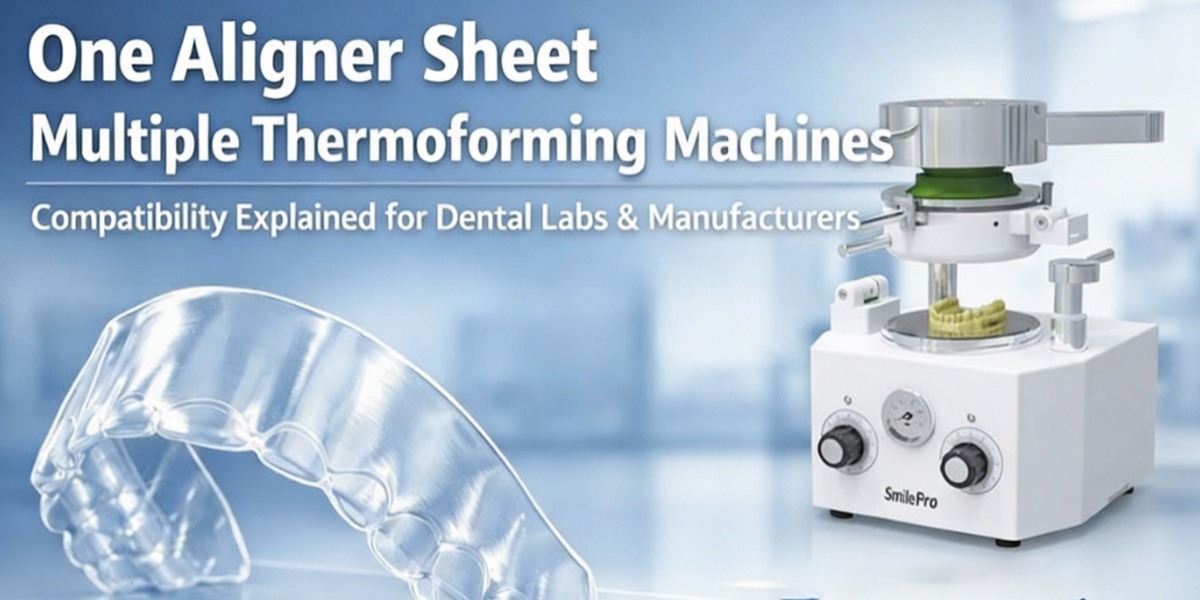
Dental aligner sheets compatibility is one of the first questions dental labs and aligner brands ask us.
And honestly, it should be.
Because nobody wants to buy new machines just to fit a new sheet.
I hear the same worries over and over again.
Will this sheet work on my Biostar?
Do I need to change my forming parameters?
Will it fail on vacuum machines?
What if it works in testing but not in daily production?
If you run a dental lab or an aligner brand, compatibility is not a “nice to have”.
It’s production safety.
It’s cost control.
It’s peace of mind.
I’m going to break this down simply.
No fluff.
No theory you don’t need.
Just how one aligner sheet can work across multiple thermoforming machines — and why that matters to your bottom line.
Why Thermoforming Compatibility Actually Matters
Let’s be real.
Dental labs don’t want complexity.
You already deal with:
Tight turnaround times
Different prescriptions
Equipment maintenance
Staff training
The last thing you want is:
“A sheet that only works on one machine.”
When aligner sheets are not compatible, here’s what happens:
Higher scrap rates
Inconsistent fit
Operators constantly tweaking settings
Slower production
And all of that costs money.
That’s why thermoforming dental sheet compatibility is not a technical detail.
It’s a business decision.
What Determines Aligner Sheet Compatibility?
his part is simpler than most suppliers make it sound.
Compatibility comes down to a few real-world factors.
1. Material Behaviour Under Heat
A good clear aligner material heats evenly.
No bubbling.
No uneven soft spots.
Predictable forming window.
That means your team doesn’t need to “guess” every time.
2. Thickness Consistency
Inconsistent thickness kills compatibility.
It causes:
Poor fit
Weak edges
Deformed margins
Our dental aligner sheets are manufactured with tight thickness tolerances so they behave the same way across different machines.
3. Pressure vs Vacuum Response
Not every lab uses pressure forming.
Not every lab uses vacuum forming.
A compatible sheet must handle both.
That’s non-negotiable today.
Compatible with Major Thermoforming Machines
This is the part most buyers care about.
So let’s be direct.
Our aligner sheets are commonly used with:
Pressure Forming Machines
Biostar
Ministar
Erkopress
Vacuum Forming Machines
Essix systems
Standard dental vacuum formers
No special tooling.
No machine-specific versions.
No complicated setup.
One sheet.
Multiple machines.
That’s the goal.
Multi-Layer & Dual-Laminate Performance
Some aligner sheets fail when layered.
They separate.
They warp.
They lose clarity.
That’s unacceptable in daily production.
Our multi-layer aligner sheets are designed to:
Maintain structural integrity during forming
Stay bonded under pressure
Deliver consistent elasticity
This matters for:
Retainers
Night guards
Long-wear aligners
And yes, this applies across different thermoforming machines.
Why Labs Choose Our Aligner Sheets
I’ll keep this practical.
Dental labs and aligner brands choose our sheets because they want:
Compatibility with mainstream thermoforming machines
Stable forming results
Consistent clarity and fit
OEM and bulk supply options
Long-term production reliability
If you want to learn more about how we manufacture and control this consistency, you can
view our aligner sheet products here.
FAQs – Straight Answers
Do your aligner sheets work with Biostar machines?
Yes.
They are widely used on Biostar and similar pressure forming systems.
Can I use the same sheet for vacuum and pressure forming?
Yes.
No separate versions required.
Do I need to change my forming parameters?
Usually no.
Minor adjustments may be needed depending on your workflow, but no special setup is required.
Can I test samples on my machine?
Absolutely.
Testing on your own equipment is the smartest way to validate compatibility.
The Bottom Line
You don’t need more materials.
You need fewer materials that work everywhere.
One aligner sheet.
Multiple thermoforming machines.
Less waste.
Less friction.
More control.
If you’re sourcing dental aligner sheets and compatibility matters to your operation, start with a material designed for real lab environments — not just lab brochures.
And yes, dental aligner sheets compatibility is exactly where you should be focusing.
Related Blog
Inquire Us Now
We will Get Back to You soon