
Best Material For Night Guards: A Lab & Clinic's Guide
For any dental lab or clinic, the fabrication of night guards is a routine procedure. But in a competitive market, moving beyond “routine” to “profitable and reputable” is what sets successful businesses apart. The choice of material for night guards is far more than a simple clinical decision; it’s a critical business decision that directly impacts patient satisfaction, remake rates, and your lab’s bottom line.
Bruxism is a widespread issue, but an ill-suited night guard can lead to poor patient compliance, premature wear and tear, and the one thing every lab dreads: costly remakes. This guide is designed for dental lab owners, technicians, and clinicians who want to look beyond the upfront cost of materials. We will provide a comprehensive analysis of the best material for night guards, comparing the pros and cons of hard, soft, and dual laminate options to help you maximize both clinical outcomes and your lab’s profitability.
Understanding the fundamental differences between the primary material types is the first step in making an informed decision. The debate often centers on hard vs soft night guard material, but the answer depends entirely on the patient’s specific needs.
A) Hard Materials (e.g., PETG): The Choice for Durability and Precision
Hard night guards, typically fabricated from robust thermoforming sheets like PETG (Polyethylene Terephthalate Glycol), are the gold standard for treating moderate to severe bruxism.
- Properties: These materials are rigid, extremely durable, and offer superior dimensional stability. This allows technicians to create highly accurate appliances that can withstand significant grinding forces and allow for precise occlusal adjustments.
- Best For: Patients with heavy bruxism or those requiring complex occlusal splints. The rigidity ensures that the opposing teeth glide smoothly over the surface rather than “gripping” it, which can exacerbate muscle tension.
- Business Advantage: The unparalleled durability of PETG sheets for night guards means an extremely low rate of remakes due to wear or fracture. For a lab, this isn’t just a clinical success; it’s a powerful business asset. It translates to fewer warranty claims, reduced material waste, and a stronger reputation for quality that attracts and retains high-value dentists.
B) Soft Materials (e.g., EVA): The Choice for Comfort and Versatility
Soft night guards are fabricated from flexible materials like EVA (Ethylene Vinyl Acetate), known for their comfortable, cushioned feel.
- Properties: EVA is pliable, soft, and excellent at absorbing impact.
- Best For: Patients with mild bruxism, those who clench rather than grind, or individuals who cannot tolerate the feel of a hard appliance. Due to their flexibility, EVA material for soft splints is also the go-to choice for fabricating athletic mouthguards and bleaching trays.
- Business Advantage: The material cost for EVA sheets is generally lower, and the fabrication process can be faster. This makes them a cost-effective option for a variety of applications, allowing labs to offer a wider range of services at competitive price points.
C) Dual Laminate Materials (Hard/Soft): The Hybrid Solution
Dual laminate, or hard-soft, splints offer a “best of both worlds” approach. They feature a durable, hard exterior to withstand grinding forces and a soft interior liner for enhanced patient comfort.
Properties: Combines the rigidity of hard materials with the comfort of soft materials.
Best For: Patients who require the durability of a hard splint but are sensitive to the feel of rigid acrylic against their teeth.
Business Advantage: This is a premium product. Offering dual laminate splints allows your lab to cater to a specific patient need and command a higher price point, boosting the profit margin on each case.
Your Decision Checklist: 4 Factors to Choose the Best Material
Now that we know the options, how do you decide? Here is a practical framework for labs and clinics to select the best material for night guards based on both clinical and business factors.
Severity of the Patient’s Bruxism: This is the primary clinical driver. Heavy grinders will destroy a soft guard in months, leading to patient dissatisfaction and a remake for your lab. For these cases, a hard PETG splint is a necessity. For light clenchers, a soft EVA guard may be sufficient and more comfortable.
Durability and Your Lab’s Reputation: Every remake erodes your profit margin and damages your reputation. Choosing a high-quality, durable material from the start is an investment in your brand. A slightly
- Patient Comfort and Compliance: An uncomfortable night guard will end up in a drawer, not in the patient’s mouth. The goal is to match the material to the patient’s tolerance. Offering both hard and soft options demonstrates your lab’s commitment to patient-centric solutions.
- Fabrication Efficiency and Profitability: Your choice of material directly impacts your workflow. How much time does a technician spend on finishing and polishing? Is the material easy to work with? High-quality thermoforming sheets that are easy to trim and polish save valuable labor costs, directly increasing the profitability of each appliance you produce.
The SmileFind Solution: The Right Material for Every Case
After analyzing the clinical needs and business implications, it’s clear that a one-size-fits-all approach doesn’t work. A successful lab needs a reliable supplier that provides high-quality options for every scenario.
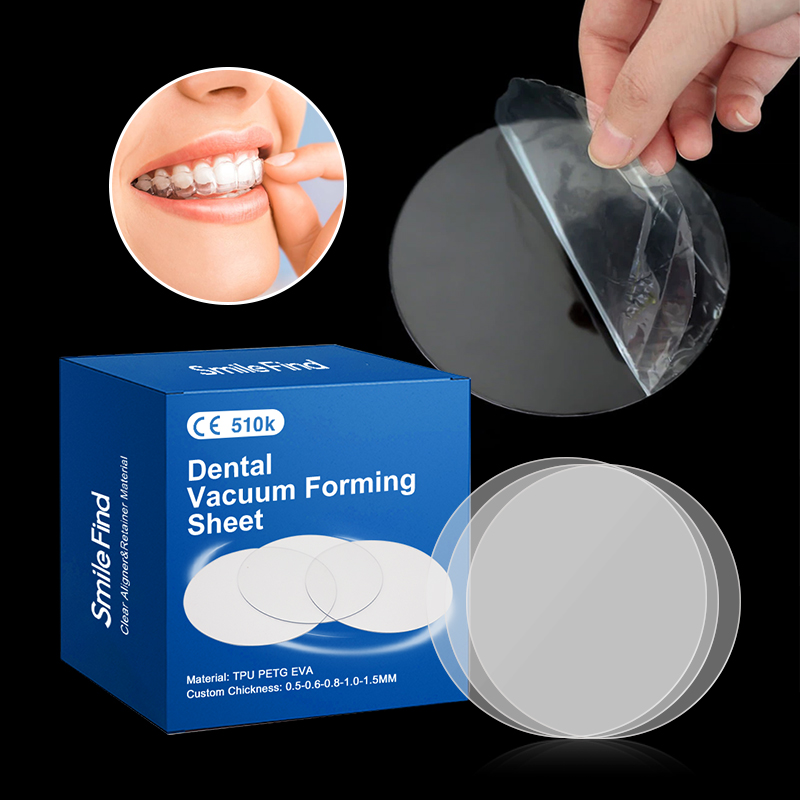
At SmileFind, we specialize in providing professional-grade thermoforming materials designed to enhance your lab’s efficiency and output.
For Severe Bruxism & Maximum Durability: We recommend our SmileFind High-Strength Hard PETG Sheets. Their exceptional wear resistance and dimensional stability ensure you can fabricate appliances with confidence, getting it right the first time and virtually eliminating remakes.
For Patient Comfort & Versatile Applications: Our SmileFind Medical-Grade Soft EVA Sheets offer unparalleled comfort and flexibility. They are the ideal choice for soft night guards, athletic mouthguards, and bleaching trays, allowing you to expand your services with a single, reliable material.
All SmileFind thermoforming sheets are manufactured to the highest standards, ensuring biocompatibility, excellent clarity, and ease of fabrication. With FDA and CE certifications, you can provide your clients with appliances that are both safe and effective.
Conclusion: A Smart Choice for a Win-Win Outcome
Choosing the best material for night guards is a decision that creates a win-win scenario. It leads to better clinical outcomes and higher patient satisfaction, which in turn strengthens your relationship with your dental clients. For your lab, it means higher efficiency, lower remake rates, and ultimately, greater profitability. By investing in high-quality materials, you are investing in the long-term success of your business.
Ready to enhance your lab's offerings and profitability?
Related Blog
Inquire Us Now
We will Get Back to You soon